
The businesses built around a farm, without owning one
A Karoo farm runs on mechanics, fencing teams, shearers and vets, all of whom bring skills a farmer needs, often at just the right moment. This article looks at the people whose work keeps a farming district going.
A farmer might own the sheep and the land, but can't do every job a farm demands. A tractor breaks down while elsewhere a fence needs repair before animals can be moved to a camp. Shearing involves a team with the skill to work quickly and handle the wool properly. A sick animal needs a vet already covering a wide area.
Farm work often supports another part of the Karoo economy: people who earn their living around farms, without owning one themselves.
The most obvious, and indispensable example is the mechanic. Farm vehicles and machinery work over long distances, often far from a dealership or parts supplier. A local workshop that can diagnose a fault and make a practical repair can save a working day when there's a job that can't wait.
Fencing teams have a similar place in the farming calendar. Fences separate camps to help farmers manage grazing. Erecting a new line takes physical work and judgement about the ground crossed.
Then there are the businesses that travel with the animals. A livestock transporter connects a farm to an auction or an abattoir. The work involves suitable vehicles and careful loading along with knowledge of animal movement requirements. These responsibilities became especially pertinent during foot-and-mouth disease responses. Provincial authorities in the Western Cape have issued information to transporters and require livestock movements to be reported as part of disease control.
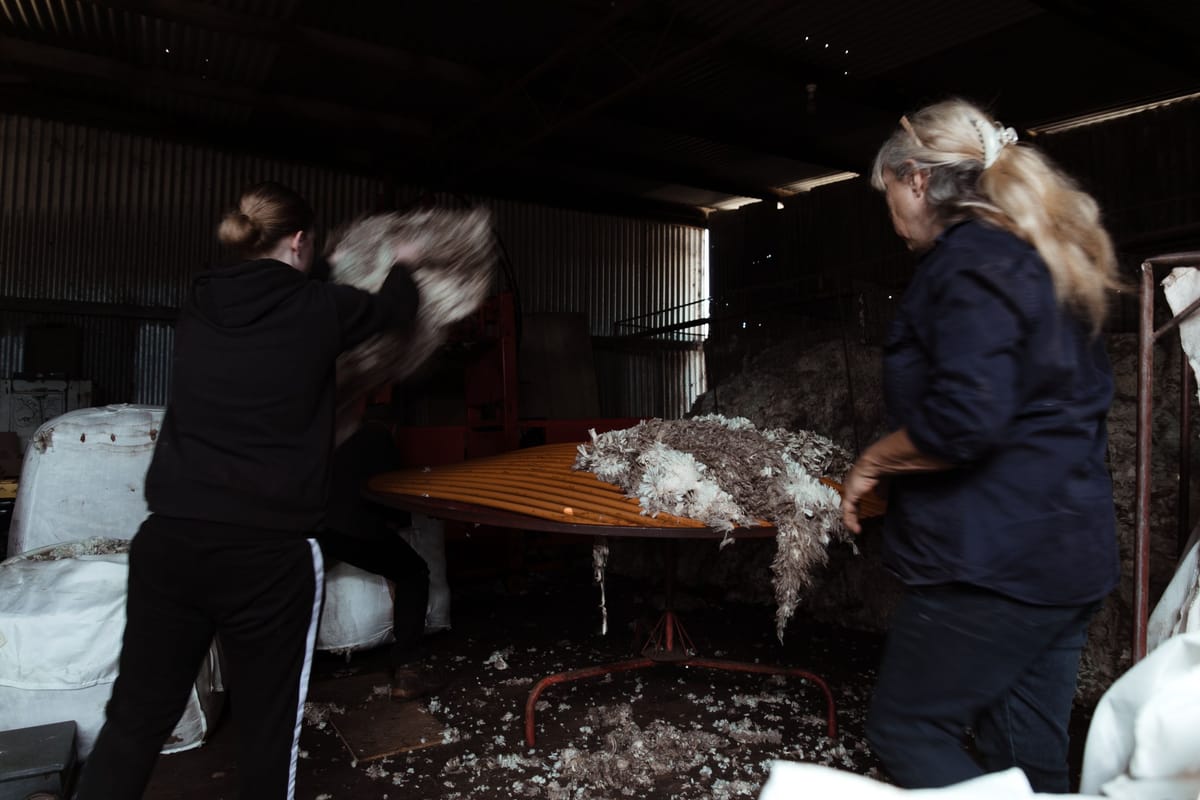
A shearing team arrives for a concentrated period of work, then goes on to the next shed. The shearer’s skill is only one part of it. Wool must also be sorted and prepared so that a year’s work on the farm reaches the market in good condition. Cape Wools SA describes on-farm classing and clip preparation as an important strength of the South African wool industry, and its shearing standards recognise the importance of quality work.
Veterinary work is less predictable. Routine visits and preventive care can be planned; an injured animal or suspected disease can't. Private veterinarians and state veterinary staff have different roles, but are part of the wider system on which livestock farming relies.
These businesses face many of the same pressures as their farming clients. They must cover distance and maintain difficult overheads. A specialist could serve several towns because one small district can't provide enough work on its own. This makes the service valuable, but it can also make it harder to reach at short notice.
The relationship runs both ways. Farms are customers for workshops, transporters, fencing crews and skilled livestock workers. Those businesses, in turn, make it possible for farms to keep operating without owning every machine or employing every specialist full time. Farms create work for people whose future in the district doesn't depend on land.
It's easy to picture Karoo farming as a farmer working alone against a vast, intractable land. The reality is much more connected. Behind a bale of wool or a truckload of sheep is a chain of people who have repaired, built, handled, checked and driven. Their businesses are part of what keeps a farming town alive.
Comments ()