
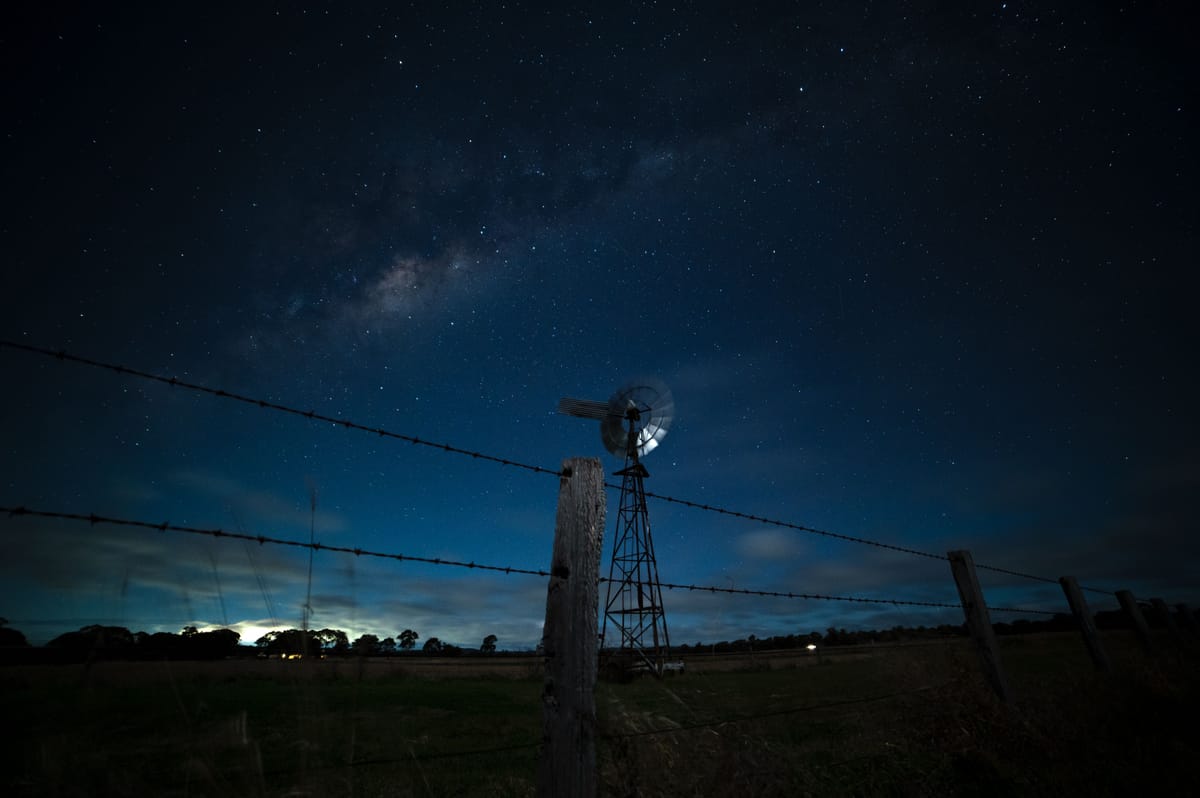
Researchers will use this technology to investigate some of astronomy's biggest questions, including how galaxies evolve, how black holes shape the universe and what happened shortly after the Big Bang.
A new international research paper published in June marks another important milestone for the Square Kilometre Array Observatory (SKAO) in the Karoo. Although the findings are highly technical, their significance is surprisingly easy to understand. They show that a prototype radio telescope in the Karoo has successfully joined some of the world's most powerful telescopes to observe the universe as though they were one enormous instrument.
This is essentially another step towards making the Karoo one of the world's leading centres for radio astronomy.
One telescope spread across the world
The telescope discussed in the study is known as SKAMPI, a prototype dish located at the SKAO site near Carnarvon. SKAMPI is designed to test the technology and techniques that will eventually be used by the full observatory.
The latest research demonstrated that the telescope can successfully participate in a method called Very Long Baseline Interferometry, or VLBI. The name sounds intimidating but the idea behind it is straightforward.
 Naomi Roebert
Imagine trying to read a tiny word printed on a coin from hundreds of kilometres away. One telescope simply cannot achieve that level of detail. Instead, astronomers connect many telescopes spread across different countries. Each observes the same object in space at exactly the same moment while recording the incoming radio signals with extraordinary precision.
Those recordings are later combined by powerful computers, effectively creating a single telescope as large as the distance between the participating observatories. The larger the distance, the sharper the image becomes.
For this latest test, the Karoo telescope successfully worked alongside radio telescopes in Europe, Australia and North America, proving that it can operate as part of this astounding global network.
The Karoo's unique role
The success of the project owes much to the Karoo itself. Unlike optical telescopes, which rely on visible light, radio telescopes detect extremely faint radio waves arriving from distant galaxies and black holes. Those signals are incredibly weak. Everyday technology such as mobile phones and even microwave links can interfere with the observations.
 Naomi Roebert
The Karoo, with its low levels of radio interference and open terrain, creates one of the quietest radio environments on Earth. That natural advantage, along with legislation protecting the area's radio silence, has transformed the region into a scientific asset of global importance.
An achievement of global significance
This latest paper demonstrates that the technology being developed in the Karoo is working exactly as scientists hoped. Every successful engineering milestone strengthens confidence in the SKAO project while reducing the technical risks involved in building what will eventually become the largest radio telescope ever constructed.
Researchers will use this technology to investigate some of astronomy's biggest questions, including how galaxies evolve, how black holes shape the universe and what happened shortly after the Big Bang.
What this means for the future of astronomy
Major scientific breakthroughs are built through hundreds of smaller successes, each one laying the foundation for discoveries still to come. While this latest achievement may not capture headlines around the world, it confirms that the Square Kilometre Array Observatory is moving steadily towards its goal.
The Karoo's famous silence and starry skies are helping humanity explore the universe with unprecedented clarity.
 Lynette Spencer
 Liz Thorne
 Mariana Balt



Comments ()