
The long journey from Karoo wool to finished cloth
A finished jacket offers few clues about the farm behind it. The garment's fibres have crossed oceans more than once while passing through several companies and countries.
 Naomi Roebert
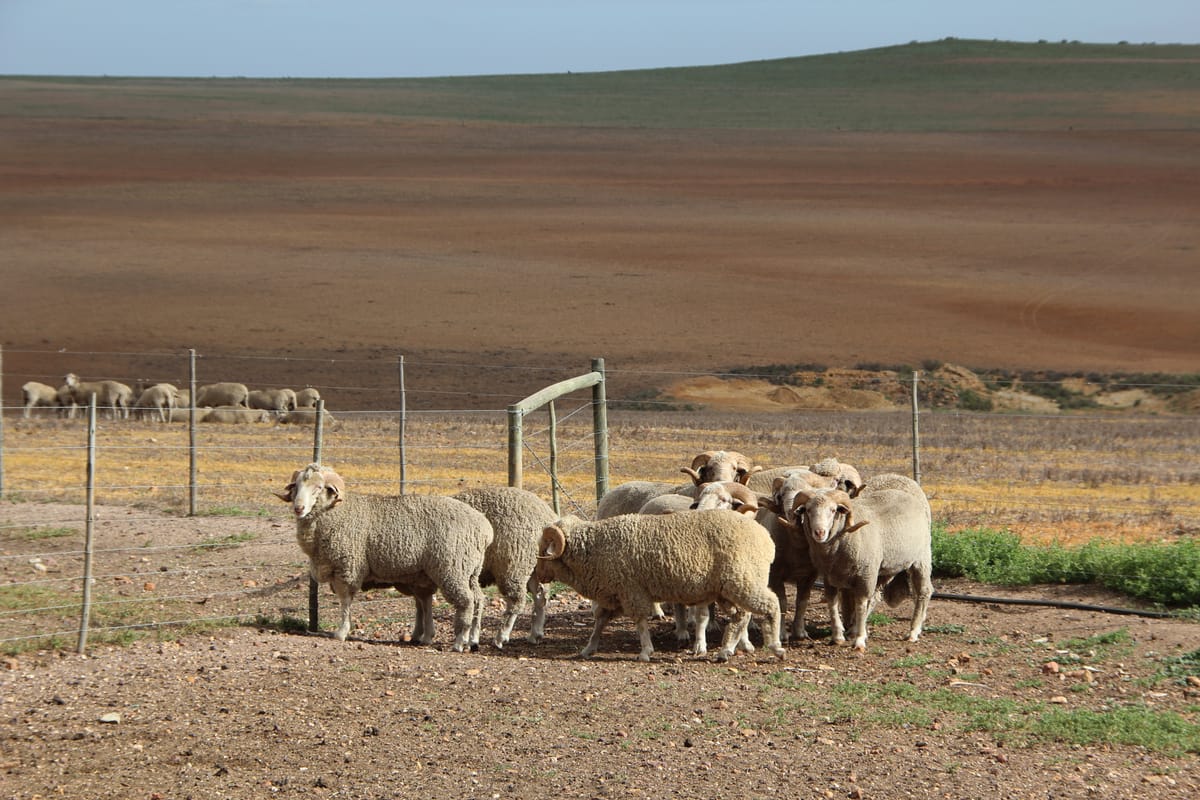
A fleece sliding from a sheep’s back on a Karoo farm is still a long way from becoming a winter coat. At this stage it is greasy wool that bears everything from dried perspiration to plant matter and natural wool wax accumulated during months on the veld.
What follows is a journey through warehouses, laboratories, auction catalogues, shipping containers and foreign mills. Much of the value is added far from the farm where the fibre was grown.
The fleece leaves the sheep
Shearing is the first decisive step. A skilled shearer removes the fleece while trying to keep it intact and avoid cutting the fibres twice. These short second cuts reduce quality and can create problems during spinning.
Once removed, the fleece is spread across a classing table. Stained or matted sections are separated, along with shorter wool from the belly and other parts of the sheep. The remaining fleece is assessed according to characteristics such as fineness, length, strength, colour and general condition.
This classing process determines which wool can be packed together. A single bale doesn'tt normally contain one fleece but compatible wool from many sheep, grouped to create a consistent line that buyers can purchase for a particular manufacturing purpose.
From farm bale to sale lot
The classed Karoo wool is pressed into dense bales, marked for identification and sent to a wool broker. At the broker’s warehouse, the grower’s clip is weighed and then recorded and divided into sale lots.
Representative samples are taken from those lots for objective testing. Fibre diameter is measured in microns, with one micron equal to one-thousandth of a millimetre. Laboratories also assess factors like staple length and staple strength.
Clean yield estimates how much usable fibre will remain once grease and other material have been washed away. This is important because buyers need to know how much clean wool is likely to be produced.
South African wool is sold largely through the auction system centred in Gqeberha. Buyers examine the test results and compete for lots that fit orders from processors and manufacturers. The price reflects fibre quality along with international demand and currency movements. Conditions in the much larger Australian market are also factored in.
Where South African wool goes
Government industry reporting has historically placed exports at more than 90% of production, shipped in greasy or partly processed form.
China is now the dominant destination. Figures reported for the 2024/25 season show that South Africa exported 44.3 million kilograms of greasy wool worth R4.44 billion, with China remaining the principal market. Trade data for 2024 similarly valued South African wool exports at about US$282 million, of which approximately US$191 million went to China.
Other buyers include European processing centres like Italy and the Czech Republic, along with India and Bulgaria, although their shares change between seasons. This means a fleece shorn in the Karoo will most likely leave South Africa before it becomes yarn or fabric.
Chinese mills process wool for both domestic use and international clothing supply chains. The fibre is spun or woven in China before appearing in garments sold in Asia, Europe or North America.
Washing away the Karoo dust
The first major industrial process is scouring. Wool passes through a series of bowls of warm water and detergent, which remove dirt, perspiration salts and lanolin, a natural grease. The clean fibre is dried before being carded. Carding separates and opens the tangled fibres, arranging them into a more manageable continuous web or strand.
For fine worsted yarns, the wool is also combed. This aligns the longer fibres while removing short pieces called noils. The resulting smooth, continuous strand is known as wool top, which can be blended with wool from other farms or countries for a precise colour and fineness.
By this point, the identity of an individual Karoo fleece has usually disappeared into a much larger processing batch.
From loose fibre to fabric
During spinning, the prepared fibres are drawn out and twisted into yarn. That yarn may be woven into structured cloth or knitted into softer, more flexible material.
South Africa produces mainly apparel wool, with Merino making up the greater part of the national clip. Fine South African Merino wool is suited to clothing because it can produce lightweight fabric that feels softer against the skin.
Merino's possible uses include suits, knitwear, coats, scarves, socks and increasingly technical or outdoor clothing. Wool can absorb moisture vapour, help regulate temperature and retain warmth without having to become a heavy garment. Stronger or coarser fibres are better suited to blankets or carpets.
The distance between producer and product
Karoo farmers produce a globally traded natural fibre, but South African shoppers buy it back only after much of its transformation has happened overseas. A finished jacket offers few clues about the farm behind it. The garment's fibres have crossed oceans more than once while passing through several companies and countries.
Still, the journey starts in a shearing shed, with a fleece lifted from the boards and placed on a table, ready to be judged for what it might eventually become.
 Lynette Spencer
 Liz Thorne
 Mariana Balt

Comments ()