
The tiny birds that make the Karoo sing
Autumn in the Karoo slips in through softened birdsong, subtle plumage changes and the departure of summer migrants. Tiny birds are ecological workers as well as seasonal storytellers and here is how they signal the season’s shift.
🔴 You might also like to read:
 Naomi Roebert
 Naomi Roebert
As the afternoons begin to sharpen and soften all at once, the wind comes crisp and hints at winter's edge. But long before we pack away our summer clothes, the birds tell us autumn is arriving.
The birds of the Karoo do this in subtle ways, they adjust their calls and movements, even the places they choose to perch. These tiny ambassadors of the season change the soundscape of our veld to a more reflective mood across the plains.
When the weavers fall silent
Throughout summer, the Southern Masked Weaver dominates farmyards and windbreaks. His bright yellow body flashes against blue sky while his mechanical chatter fills the air. As the breeding frenzy subsides, that urgency fades. The nests dry and loosen in the thorn trees, along with the males losing their blazing plumage.
In early autumn, the weavers grow less flamboyant and more practical. Feeding flocks gather in open grasslands with less flamboyance. Their softened colours mirror the veld's muted gold. The drama of summer gives way to a steadier routine as all around them the Karoo quietens.
The soft whistle of the lark
Larks are among the most faithful companions of changing seasons. Species such as the Karoo Long-billed Lark are rarely seen up close but their songs carry across vast distances. During summer, territorial calls rise sharply into the morning air. As autumn approaches, that intensity eases.
Instead of sky-high displays, they keep lower to the ground, blending into scrub and dust. Their calls grow less insistent and more conversational.
In this way, the Karoo birdlife lowers its pitch while conserving energy for colder nights ahead.
This change is unmistakable for farmers and walkers who rise early. The dawn chorus becomes less crowded and there is space between the notes.
Sunbirds in a gentler light
While many think of autumn as a time of decline, nectar feeders remain active. The Malachite Sunbird, with its iridescent green plumage and long curved bill, continues to patrol aloes and late-blooming shrubs. As well as drawing on autumn flowers, these birds also switch more readily to insects as nectar sources taper.
Their metallic calls still ring out, though less frantically than during courtship months. In sheltered valleys where aloes begin to spike, they bring flashes of brilliance to otherwise earthy tones. Not only do they pollinate indigenous plants, they also carry the last flickers of summer colour into the cooler season.
Chats and robins reclaim the foreground
As insect numbers begin to drop, ground feeders such as Familiar Chats and Karoo Scrub Robins become more noticeable. Without the competing din of breeding colonies and migratory visitors, their movements draw attention.
Familiar Chats perch boldly on fence posts, dipping their tails while scanning for beetles. Karoo Scrub Robins skulk through low shrubs, flicking aside leaf litter with deliberate efficiency. Their calls are short and clean, cutting through still air.
These resident species anchor the environment year-round but in autumn they seem especially present. While swallows gather to depart and cuckoos fall silent, the locals remain.
The departure of migrants
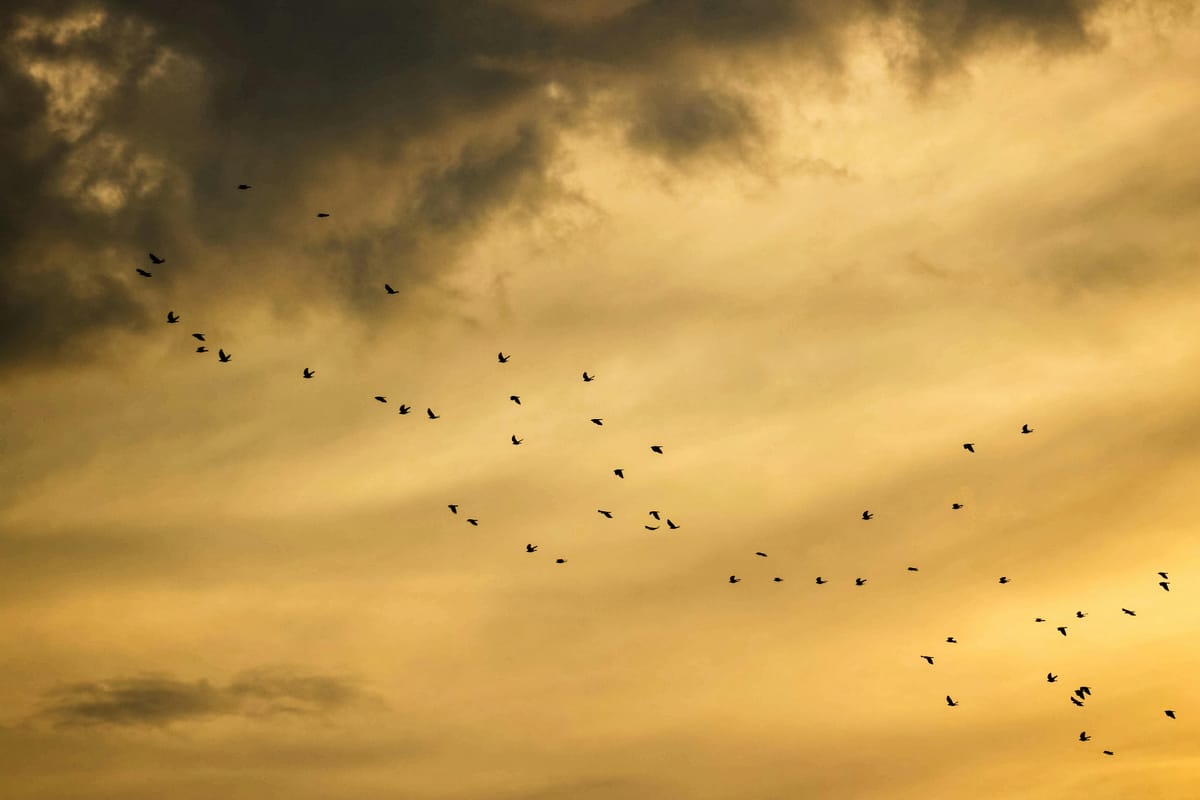
Summer migrants such as European Bee-eaters and some cuckoo species begin preparing for departure as daylight shortens. Flocks gather on telephone wires, their chatter thinner than before. Within weeks, they will head north across Africa.
Their absence leaves a noticeable gap. The sky feels wider and the soundscape less busy. Observing these subtle movements is part of the joy of a local wildlife that reveals itself through patience. This seasonal exchange, residents settling in while migrants slip away, affects the emotional tone of the region.
Listening closely
For those who live on farms or spend time walking koppies and riverbeds, tuning in to these changes becomes second nature. The reduction in birdsong often coincides with other shifts. Grasses seed and insects thin out; the wind grows more consistent while evenings cool.
Birds respond to these environmental cues with remarkable sensitivity. Shorter daylight hours influence hormones, which in turn adjust breeding behaviour and feeding patterns. What feels poetic to us is, for them, a precise biological recalibration.
The small voices of the veld
It can be easy to overlook what is small in a region defined by vastness. The Karoo’s power lies not only in its endless horizons, but also in the fine threads that stitch together sky and earth.
Tiny birds carry seeds, control insect populations and pollinate flowering shrubs. They are ecological workers as well as seasonal storytellers.
Paying attention to them attunes our own sense of place. While markets fluctuate and rainfall patterns change, the subtle recalibration of birdlife reminds us that cycles endure.
🔴 You might also like to read:
 Naomi Roebert
 Naomi Roebert
 Naomi Roebert



Comments ()