
The town built around a monthly journey to church
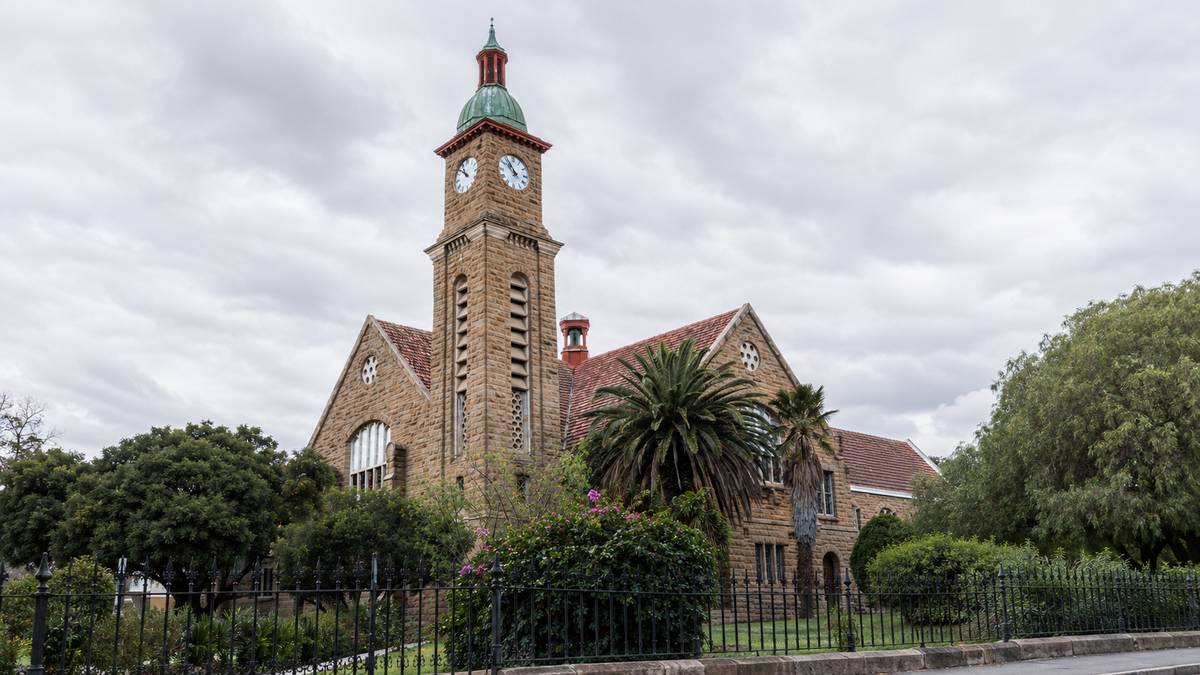
The church standing today is the grand successor to the modest building around which Calitzdorp first formed. The reason for the town’s emergence is wonderfully practical: people needed somewhere closer to gather, and Calitzdorp grew from that need, one returning wagon at a time.
Long before Calitzdorp had a main street or the imposing sandstone church that now anchors its skyline, the town had a travel problem. Farming families living in the area were served by the Dutch Reformed congregation in Oudtshoorn.
Reaching church meant setting out across the Klein Karoo over rough roads and rivers without bridges. A journey that takes less than an hour by car today took considerably more preparation in the 1850s. Communion, commonly known by the Afrikaans word Nagmaal, was an important gathering that drew farming families into town.
People came to worship while collecting supplies and renewing connections with neighbours they might seldom see. Oudtshoorn was simply too far away for this regular journey, and it was a difficulty that birthed a town.
A settlement before there was a town
By the early 1850s, a sizeable farming community had developed in the valleys west of Oudtshoorn. Many residents shared the surname Calitz, which is how the area came to be informally known as Calitz Dorp, meaning Calitz village.
The name appears to have been used before an organised village existed. A local historical account records that in 1854, the Reverend Van der Riet baptised 14 children in “Calitz Dorp in the parish of Oudtshoorn”. At that point there was no independent congregation and no established town centre. The name described a community.
The decisive step had come a year earlier. In 1853, members of the Calitz family donated land for a church and school, partly because travelling to Oudtshoorn for the monthly communion gathering had become impractical. The history of Calitzdorp therefore began with the everyday difficulty of distance.
Construction of the first church reportedly began in 1855. Sources differ slightly over whether it was completed in 1857 or developed over several years, although they agree that the church became the centre around which the village grew. Building plots were later laid out and sold as the settlement took clearer shape.
More than a Sunday service
The church did work that stretched well beyond religion in a scattered farming district by creating a reliable meeting point in a region where people lived far apart.
A communion weekend brought time to discuss local affairs. Families could visit traders and source goods that were difficult to find in the countryside. Children met relatives while adults exchanged information that might otherwise take weeks to travel.
The school was equally important. A permanent place of education gave families another reason to settle closer to the emerging village and strengthened Calitzdorp’s role as a local centre.
Homes made for occasional visits
The journey to church left a physical mark on Calitzdorp. Some of its older buildings began as tuishuise, or church houses, where rural families could stay while attending services.
These were generally modest structures clustered near the church that offered temporary shelter for people who could not travel into town and return to distant farms on the same day. Their existence tells us something easily missed when looking at an old streetscape. Calitzdorp was designed partly around people who did not live there permanently.
The Calitzdorp church houses gave occasional gatherings a recognisable pace of life. Wagons arrived and settlement briefly filled with visiting families. Once the services and errands were complete, the travellers returned to their farms.
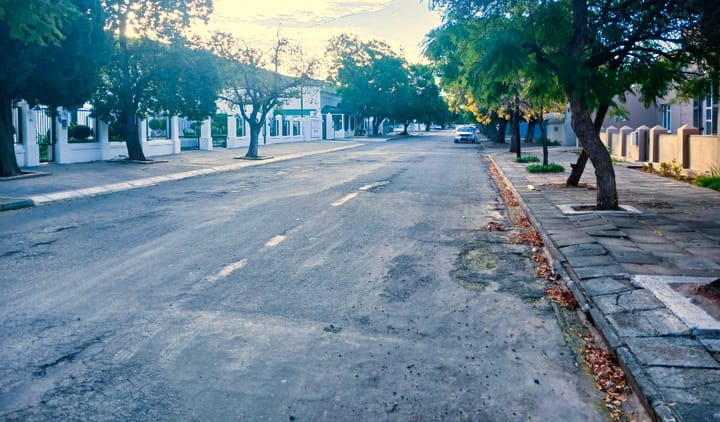
Several surviving buildings still reflect the simple Karoo architecture associated with these early structures. They are reminders that the town’s domestic history and religious history were closely connected.
The church at the centre
Calitzdorp continued to expand through the late 19th century. The town's Dutch Reformed congregation became independent from Oudtshoorn in 1873, nearly two decades after work began on the first church.
Local accounts placed the town’s population at about 4,000 by 1910. The original church could no longer accommodate the congregation, leading to the construction of the much larger building completed in 1912. The scale reflects how far the settlement had travelled from that first donated piece of farmland.
The church standing today is the grand successor to the modest building around which Calitzdorp first formed. The reason for the town’s emergence is wonderfully practical: people needed somewhere closer to gather, and Calitzdorp grew from that need, one returning wagon at a time.
 Liz Thorne
 Mariana Balt
 Lynette Spencer
Comments ()