
The transport crisis facing rural schoolchildren
Access to education in the Karoo is measured in kilometres. Until every qualifying child has a safe and reliable way to cross that distance, the journey to school will remain part of South Africa’s education crisis.
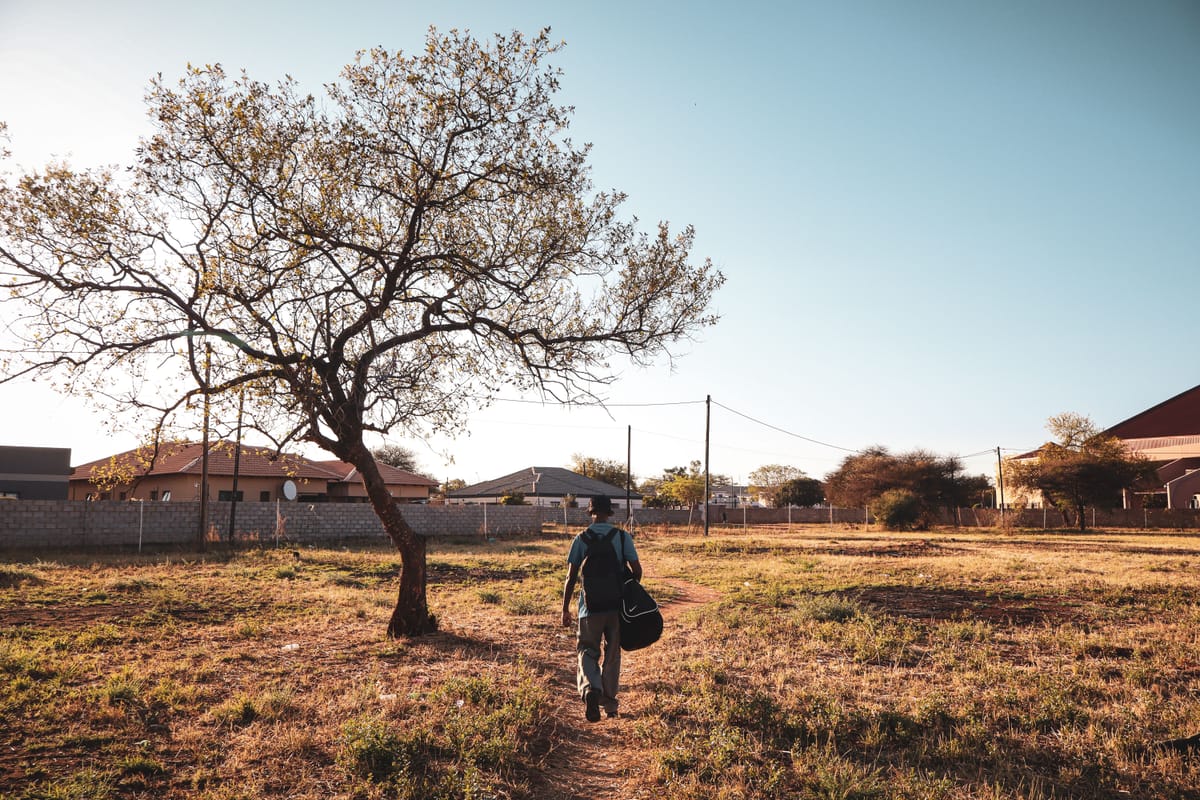
The school day begins long before the first lesson for many children in the Karoo. The day starts on a farm road and a distant collection point or inside a vehicle travelling across kilometres of gravel.
Distance is part of rural life, but it should not decide whether a child receives an education. More than 730,000 learners across South Africa are transported to school each day through government-supported programmes. According to the Department of Basic Education, this represents about 82% of the identified need. The remaining gap is substantial. Based on those figures, roughly 160,000 learners whose need has been identified are still not covered by the system.
Distance becomes a barrier to education
The National Learner Transport Policy was introduced to create a more consistent system for children who cannot reasonably reach their nearest appropriate public school. Priority is generally given to learners who travel long distances, come from low-income households and have no suitable school nearby.
The 2026/27 transport budget in the Eastern Cape provides assistance to qualifying learners from Grade R to Grade 12 who live at least five kilometres from the nearest public school. That distance may sound manageable in a vehicle, but it becomes a serious daily burden when walked in winter cold or summer heat and rain.
Karoo distances can be considerably longer. Farms are scattered across large districts, while school consolidation has reduced the number of small rural schools in some areas. A child might live relatively close to a closed school building but far from the institution that now serves the district.
The result is a daily journey that can affect attendance and concentration before learning has even begun.
Government is moving thousands of learners
Provincial figures show the scale and cost of rural learner transport. The Eastern Cape allocated R844.596 million to scholar transport for 2026/27, with a target of 103,000 learners. The province plans to spend R2.531 billion on the programme over the three-year medium-term budget period.
In the Western Cape, nearly 69,000 learners benefited from the Learner Transport Scheme each school day during the 2025/26 financial year. The province allocated R674 million, noting that the service is used predominantly in rural areas where farms are far from schools and commercial public transport is often unavailable.
The Northern Cape Education Department has reported transporting 24,741 learners from 267 schools through its programme.
These figures illustrate why learner transport is not a minor support service but a large public system linking dispersed communities to education.
Even substantial budgets do not meet every need. Funding must cover vehicles, drivers, fuel, maintenance, administration and route monitoring across vast areas.
Poor roads make difficult journeys harder
Many rural routes include gravel roads that deteriorate after heavy rain, while potholes and damaged bridges increase travel times as well as vehicle wear. A route measured on a map becomes much longer in practice when a driver must slow down or take a detour. Transport operators also face higher maintenance costs when tyres and suspension systems are repeatedly exposed to rough surfaces.
This creates a direct connection between Karoo road conditions and educational access. Provincial road maintenance is an agricultural and economic concern that also affects whether children arrive at school safely and on time.
Safety cannot depend on luck
Vehicle safety is one of the most serious concerns surrounding scholar transport in South Africa.
A national evaluation by the Department of Planning, Monitoring and Evaluation identified overloading, missing or unused safety belts and vehicle roadworthiness as recurring problems reported by learners. Concerns about punctuality were also recorded, with only around two-thirds of surveyed learners saying vehicles arrived at school on time in the morning.
Following serious scholar-transport crashes in early 2026, the national Department of Transport called for tighter enforcement. Its road-safety strategy requires regular roadworthiness testing for scholar-transport vehicles, whether they operate under government contracts or private arrangements.
The department has also highlighted the need for licensing, driver training and emergency-exit education. Regulation on paper is not enough, however. Vehicles must be inspected consistently while overloaded operators must be stopped and replacement transport must be available when a vehicle fails a test.
Parents who pay private operators face their own pressures. The cheapest available lift may be the only one serving a remote route, even when the vehicle is overcrowded or unreliable.
The cost of leaving children behind
Transport budgets are expensive, but exclusion carries its own price. Missed school days weaken academic progress, while persistent lateness reduces classroom time. Many families eventually move children to hostels or accept that attendance will be interrupted whenever transport fails.
The national programme’s 82% coverage shows that government transport is reaching most of the formally identified need. It also reveals how many children are still outside it.
Access to education in the Karoo is measured in kilometres. Until every qualifying child has a safe and reliable way to cross that distance, the journey to school will remain part of South Africa’s education crisis.
 Liz Thorne
 Mariana Balt
 Lynette Spencer
 Anchen Coetzee


Comments ()