
Travellers are coming to the Karoo to look at gardens
These ideas are becoming relevant far beyond the Karoo as towns and cities face water restrictions and the cost of maintaining thirsty gardens. The dry garden offers practical lessons for the future.
Travellers have historically come to the Karoo for its old towns and dark night skies. Now people are also coming to look over garden walls.
From September 25 to 27, Prince Albert Open Gardens will give visitors access to private gardens, food-growing projects, nurseries and conservation spaces around the town. The programme also includes guided walks and practical workshops.
Now in its fourth year, the event has welcomed more than 700 visitors since it began in 2023. The steadily growing popularity of the event reflects an interest in gardens adapted to dry conditions, which makes them useful as well as beautiful.
A garden becomes a reason to travel
Garden tourism is well established in wetter parts of South Africa, where visitors expect deep lawns lined by established trees and densely planted flowerbeds.
Prince Albert lies at the foot of the Swartberg in a semi-desert region where gardeners must make careful decisions about what to plant and where to use water. A successful garden contains aloes, vygies, medicinal plants, local shrubs, productive vegetables and patches of existing veld.
The 2026 Prince Albert Open Gardens programme includes 13 listed garden and conservation destinations. Some are ticketed private gardens while others are concept gardens that visitors can enter without a ticket.
These demonstrate several ways of gardening in the Karoo. A Wild Garden in the Making focuses on the gradual development of a new space. The Karoo Garden Collective joins three gardens into a connected, low-intervention landscape, while Kraal Garden moves between acacia-dominated grassland, an eco-dam, local shrubs, aloes, an orchard and a working nursery.
Oasis Farm focuses on food production, as its organic vegetable workshop will address heirloom seeds as well as companion planting and natural pest control. Other gardens use art or existing veld as their starting point.
The climate is part of the attraction
Karoo gardens survive in a difficult climate. A better way to understand them is that the climate determines what they become. Prince Albert is situated in a complex meeting area between Karoo vegetation types. The wider Succulent Karoo has low winter rainfall and very dry summers.
Plants growing under these conditions have developed different survival strategies. Some store water in leaves or stems. Others shed their leaves or stay dormant until conditions improve. Visitors accustomed to gardens in Cape Town or the KwaZulu-Natal coast will encounter a different idea of seasonal beauty.
Lessons that can travel home
Not every plant seen in Prince Albert will grow successfully in another part of South Africa. The useful lessons come from how different gardens are structured.
Shade can be created before delicate plants are introduced. Walls, pergolas and established shrubs reduce wind while producing cooler pockets. Plants can be grouped according to their water needs, allowing a vegetable bed or small lawn to receive regular irrigation without watering the entire property. Rainwater can also be directed towards planted areas rather than being hurried into the street.
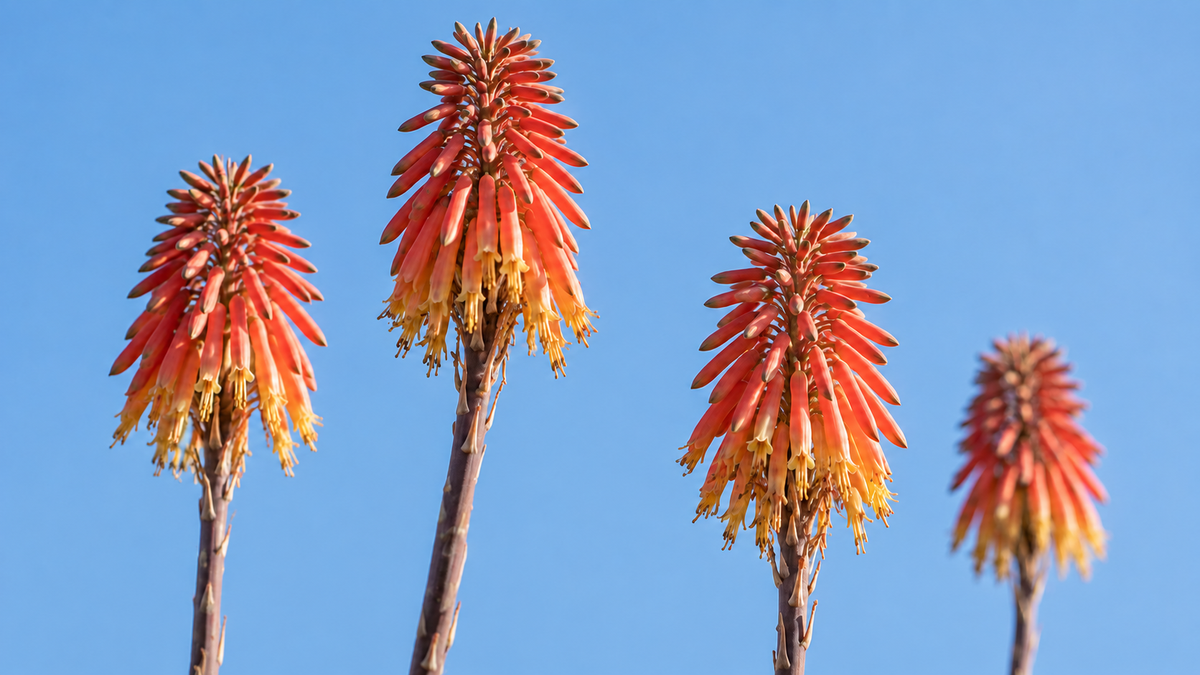
Aloe gardens and locally indigenous plantings show how colour and wildlife value can be created without copying the familiar suburban flowerbed. Productive gardens demonstrate how limited water can be concentrated where it provides food.
These ideas are becoming relevant far beyond the Karoo as towns and cities face water restrictions and the cost of maintaining thirsty gardens. The dry garden offers practical lessons for the future.
More than private gardens
The 2026 programme includes talks on Karoo gardening, local vygies, seed conservation, birds, bees and ecological restoration. Guided outings will take visitors to Wolwekraal, Gordon Koppie and the Swartberg Pass, while evening activities will explore bats, scorpions and the Karoo night sky.
This format places domestic gardens in a larger living system. One of the plants highlighted by the event is Bijlia dilatata, commonly known as the Prince Albert vygie. The rare local succulent will be available through Renu-Karoo Nursery, with each sale accompanied by the required permit.
This introduces visitors to another important distinction. Indigenous plants can't always be removed from the veld or traded freely simply because they grow locally. Responsible gardening depends on legal propagation and careful sourcing.
Tourism that supports conservation
Prince Albert Open Gardens supports Wolwekraal Nature Reserve, which works in ecological restoration and Karoo biodiversity research. Young people connected to the Prince Albert Community Trust have also worked as garden ambassadors, welcoming visitors while gaining exposure to hospitality and tourism.
These contributions show how a garden event can circulate some of its income beyond participating properties. Private gardens become part of a wider tourism economy without needing to operate as permanent attractions throughout the year.
A different way of seeing the Karoo
Open Gardens takes place as Prince Albert moves into spring, but visitors should not expect every garden to reach the season in the same condition. Visitors can see how each gardener has responded to the same fundamental limits.
Travellers are coming to see what becomes possible when the climate is treated as the beginning of the design.
 Mariana Balt
 Liz Thorne
 Lynette Spencer


Comments ()