
What the springbok migrations taught the Karoo
The ancient routes of the springbok live on in faint lines across the veld and in the sudden appearance of herds after rain.
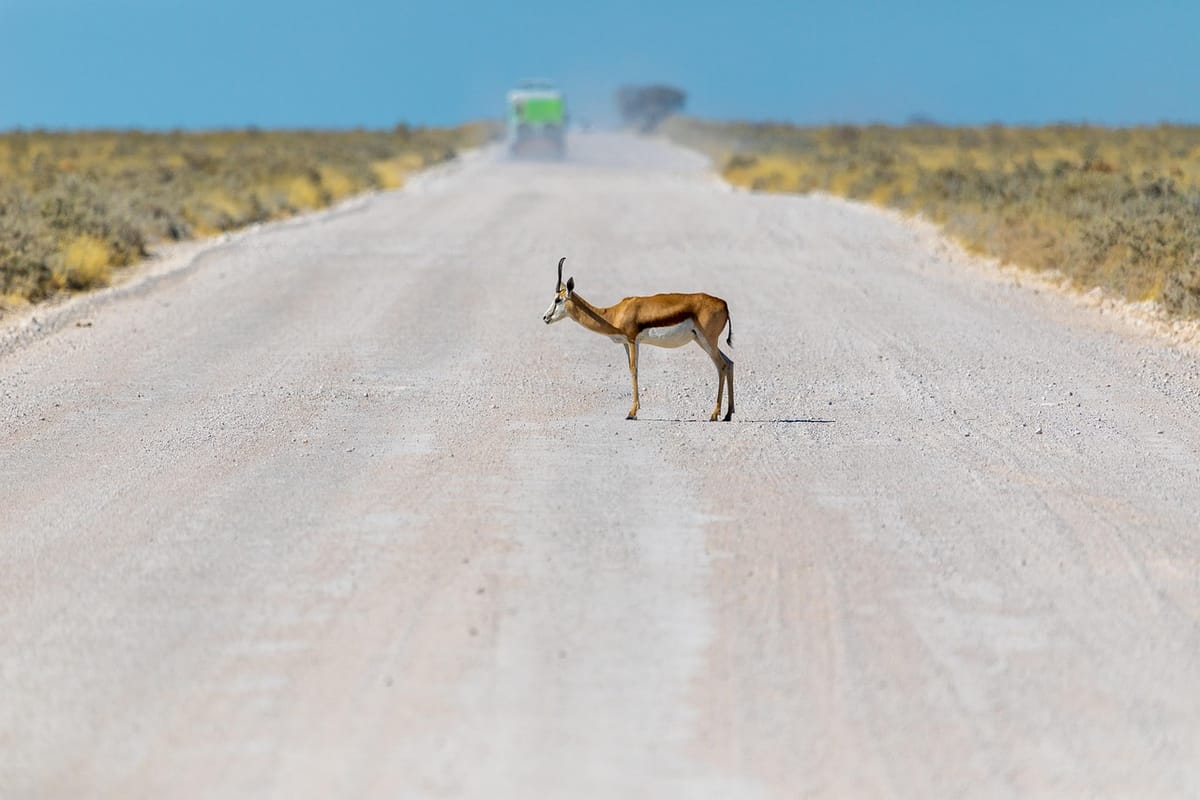

Before fences stitched the Karoo into neat parcels and roads pressed their straight lines across the plains, springbok moved like weather.
They came in numbers that felt impossible, herds flowing across the land in living rivers, driven not by season and instinct honed over thousands of years.
Early travellers and farmers wrote of it with awe. So did Indigenous communities who lived alongside these migrations long before. Springbok treks were purposeful journeys that tied distant parts of the interior together. To understand the Karoo fully, one has to imagine it in motion.
A land built for movement
The Karoo’s openness and subtle slopes once allowed animals to read the land with precision. Springbok followed green flushes that appeared after distant rains, sometimes hundreds of kilometres away, moving toward opportunity.
Fresh grazing strengthened herds while reducing pressure on any single area, allowing grasses time to recover. These routes often traced shallow valleys, seasonal pans and ancient river systems that now lie dry for most of the year. Even today, a trained eye can spot them.
Slight depressions in the veld, lines where vegetation grows differently, old paths worn smooth long ago. What looks empty at first glance often carries layers of movement beneath it.
The great treks remembered
Some of the most powerful records of springbok migrations live in oral history. Khoisan communities spoke of herds so dense that the earth seemed to ripple, of days when the horizon darkened with animals rather than clouds. Later settler accounts echoed this, describing migrations that took days to pass a single point.
These treks were not annual in a tidy sense but responded to rainfall patterns that shifted year to year, sometimes pushing herds west toward the coast, other times drawing them deeper into the interior.
Importantly, these movements shaped human behaviour too. Hunting followed the herds, seasonal camps formed along known routes and knowledge was passed down about when to wait and when to travel. As a result, migration became a shared language between people and animals.
Fences that changed the story
The arrival of fencing in the late nineteenth and early twentieth centuries altered this relationship dramatically. What had once been open pathways became barriers. Routes that springbok had followed for generations were abruptly cut off, forcing herds to adapt quickly or perish.
Some migrations collapsed entirely. Others fractured into shorter, more local movements that still echo the old patterns but lack their scale. While springbok themselves proved resilient as a species, the ancient choreography between land and animal and season was weakened.
Not all memory was erased, however. In parts of the Karoo, farmers still speak of places where springbok gather instinctively after rain, even when fencing should theoretically prevent it. Gates left open during certain months often see animals following lines no one consciously planned. The land, it seems, still remembers.
Traces in the veld
Look closely and the past reveals itself. Old wagon routes sometimes mirror animal paths, both choosing the easiest passage through tough terrain. Certain koppies appear again and again in stories as landmarks used by herds to orient themselves. Even plant distribution offers clues, with grazing patterns influencing where certain species dominate.
Modern ecologists increasingly recognise that restoring wildlife movement involves working with historical patterns, and corridors which reconnect fragmented habitats often align closely with these old routes, suggesting that memory is not only cultural but ecological.
Why these routes still matter
Understanding ancient springbok migrations reframes how we think about land use, conservation and farming in a dry region. Movement spreads pressure, supports biodiversity and builds resilience into fragile systems. When animals can move, the land rests.
There is also something deeply cultural in this story. Migration speaks to adaptability and knowing when to stay and when to go. In a time when climate uncertainty grows, these lessons may be newly relevant.
The springbok did not conquer the Karoo. Rather, their routes were conversations with grass and rain, answers to questions the land posed again and again.
A living memory beneath our feet
You may drive for hours across the Karoo without seeing more than a handful of animals, but in this sparsity is a history of movement so vast it shaped the region itself.
The ancient routes of the springbok live on in faint lines across the veld and in the sudden appearance of herds after rain. Perhaps these are reminders that the Karoo was once, and could again be, a place defined by motion rather than borders.
🔴 You might also like:
 Grace Paton
Comments ()