
Why Graaff-Reinet has one of the most beautiful churches in South Africa
Graaff-Reinet’s iconic Dutch Reformed Church rises above the Karoo skyline with remarkable elegance. Discover the history, architecture and craftsmanship behind one of South Africa’s most beautiful churches.
Few towns in South Africa possess the architectural drama of Graaff-Reinet. Tucked into a bend of the Sundays River while surrounded by the rugged folds of the Camdeboo, the town is already famous for its heritage streets as well as the remarkable Valley of Desolation. Rising above the town’s skyline is a breathtaking landmark that often stops visitors mid-step.
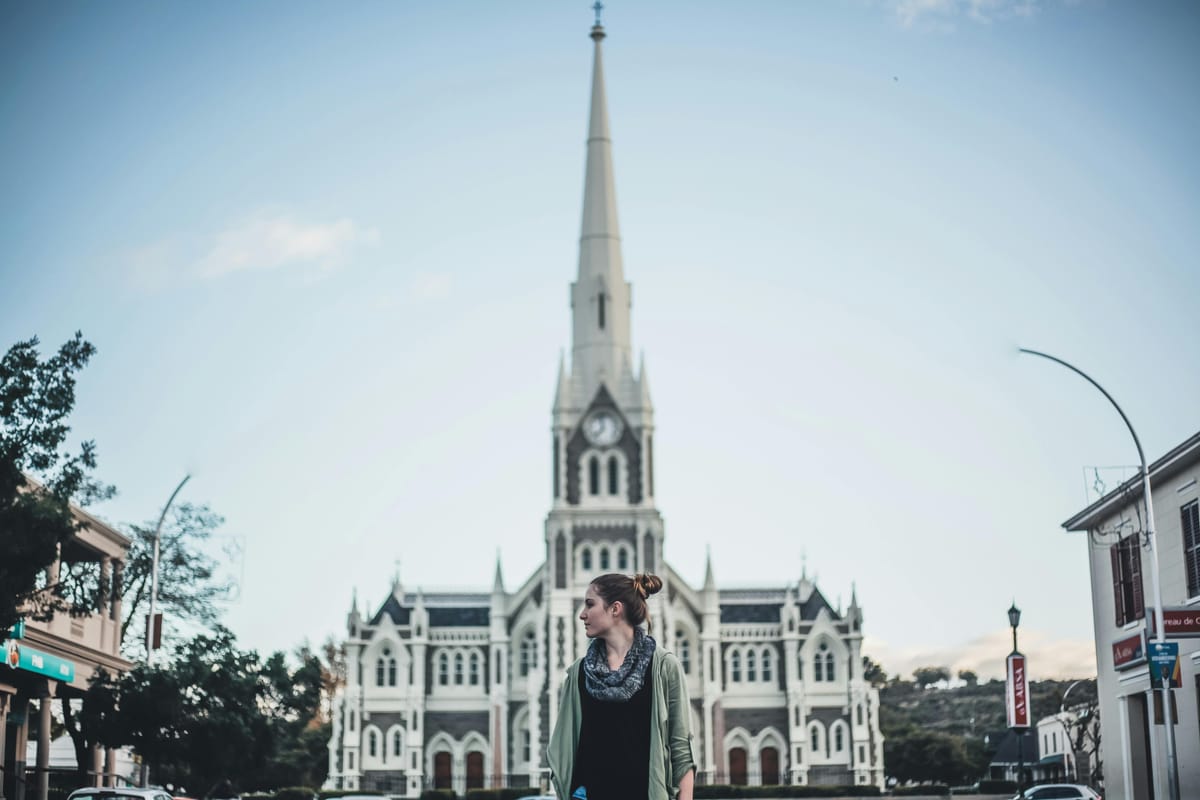
The towering Dutch Reformed Church Graaff-Reinet, often called the Grootkerk, is stone sentinel at the centre of town. Elegant and unexpectedly European in style, it has long been considered one of the most beautiful churches in South Africa. The church's beauty lies not only in the structure itself, but also in the story of the town that built it.
A church inspired by Europe
When the church was completed in 1887, it was unlike anything most Karoo residents had ever seen. Designed by architect Henry Ernest Kendall, the building took inspiration from the Salisbury Cathedral in England while embracing the Neo-Gothic style that was popular in Europe at the time. The result was extraordinary.
The church features soaring spires, pointed arches, intricate stonework along with tall stained-glass windows that catch the shifting sunlight. While many South African churches of the period leaned toward Cape Dutch simplicity, this structure embraced drama and delicate ornamentation.
Standing beneath the church’s towering central spire, which reaches roughly 45 metres into the sky, visitors often experience a moment of surprise. In the middle of a Karoo town is a building that would not look out of place in an English cathedral city.
A landmark of the town
Architecture rarely functions in isolation, and the Graaff-Reinet church shapes the town around it in subtle ways. The church is located at the head of Church Street, a long avenue lined with historic houses and museums in the shade of great trees. The spire towers above rooftops, guiding the eye while anchoring the surrounding streetscape.
Morning light catches the pale stone while evening shadows stretch across the square. Photographers discover that the building changes character throughout the day. This constant presence has helped the church become more than a religious centre but also a symbol of the town’s identity.
Craftsmanship that still impress
The church’s beauty also lies in its craftsmanship. Built from local stone, the structure reflects the skills of stonemasons who worked with remarkable precision more than a century ago.
Delicate tracery frames the windows while carved stone elements add texture across the façade. Inside, wooden pews, vaulted ceilings along with stained-glass panels create a calm and reverent atmosphere.
The light inside the building is particularly striking. Sunlight filters through coloured glass while casting gentle patterns across the interior walls. During quiet moments the church seems suspended in time. This historic craftsmanship is part of why the church remains such a powerful architectural presence today.
A reflection of Graaff-Reinet’s heritage
Graaff-Reinet is often described as the “Gem of the Karoo”, and the church plays a central role in that reputation. Founded in 1786, the town is the fourth-oldest in South Africa. Over the centuries Graaff-Reinet became an important frontier settlement while developing a strong civic identity. Wealth generated through farming as well as trade helped fund public buildings that reflected both ambition and pride.
The church stands as one of the clearest expressions of that era. Building such a structure in a remote Karoo town required resources and a commitment to the belief that this far-flung town would persist. Residents wanted a church that reflected their faith while also expressing the permanence of their settlement. That vision is remains fulfilled more than a century later.
Why visitors continue to admire it
Today the church draws travellers and architecture enthusiasts from across South Africa and beyond. Some come for the history, others for the design, while many simply pause in the square, look up at the spire and absorb the contemplative grandeur of the building.
The building is balanced, monumental and ornate without becoming excessive, historic while still alive with community life. Along with the surrounding heritage buildings, the church contributes to one of the most visually cohesive historic town centres in South Africa.
In a region defined by dramatic mountains and endless sky, the Graaff-Reinet church demonstrates that even in remote places, human creativity has always found ways to reach upward.



Comments ()