
Why international tourists are choosing the Karoo over coastal destinations
International travellers are turning away from crowded coastal hotspots and discovering the Karoo. This reflects a deeper global trend towards authenticity and more meaningful travel experiences.


South Africa’s coastline has for decades held an automatic appeal for international visitors. Beaches and wine routes fed the narrative of what a holiday here should look like. That narrative is now adjusting to a slower inland region.
The Karoo is emerging as a serious contender that is driven by global travel trends which favour space and authenticity. While coastal towns continue to attract volume, the Karoo is attracting intention.
This change reflects a broader evolution in how people travel. More overcrowding in traditional hotspots have pushed travellers to reconsider what they value. The result is a growing appetite for expansive, grounded destinations.
From overtourism to open space
Popular coastal destinations around the world are facing a common challenge. High foot traffic brings rising prices and environmental strain that have begun to erode the experience they once promised. South Africa’s own coastal regions are not immune, particularly during peak seasons.
The Karoo offers a counterpoint. Travellers accustomed to packed beaches and tightly scheduled itineraries find something refreshing, older and moving.
This aligns closely with the move towards slow travel South Africa, a trend that prioritises longer stays at fewer destinations to find deeper engagement. Visitors are choosing to spend several nights in a single town, walking its streets and speaking to locals.
Authenticity as a premium experience
Global travellers are increasingly wary of destinations that feel manufactured. Replicated experiences, polished to the point of uniformity, no longer have the same appeal. The Karoo offers something far less predictable.
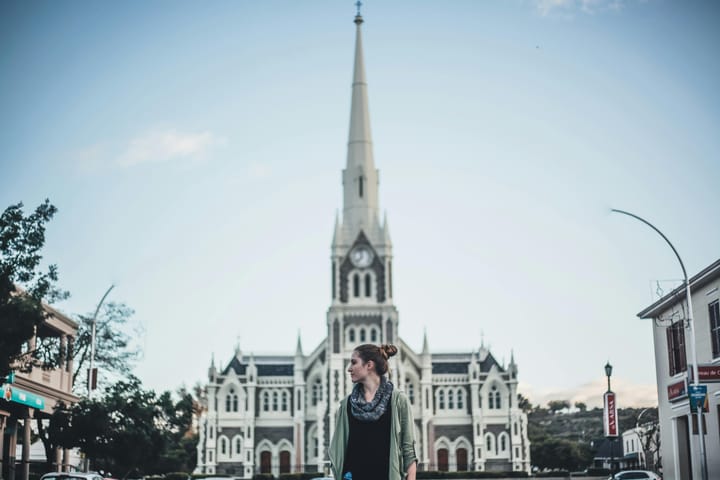
Towns such as Prince Albert, Nieu-Bethesda and Philippolis present a complex identity. Historic buildings house art galleries, and farms share space with everyday life. There is no clear boundary between tourism and reality, which makes the experience compelling.
This sense of authenticity has become a form of currency. Visitors are willing to travel further and spend more in exchange for it. Farm stays with locally sourced meals and small-scale guesthouses create a less transactional environment.
The growth of South Africa rural tourism reflects this desire to encounter destinations that have retained their character while adapting to modern expectations.
Climate and landscape as differentiators
The Karoo’s climate and geography play a role in its appeal. Clear skies with low humidity and vast horizons create conditions that are difficult to replicate elsewhere. For international visitors, particularly those from densely populated regions, this openness has a strong emotional pull.
Stargazing has become a notable drawcard. The absence of light pollution transforms the night sky into an experience in itself. During the day, the stark beauty of the terrain offers a visual language that both ancient and immediate.
Local economies begin to respond
As international interest grows, local economies are beginning to adjust. Accommodation offerings are expanding, while existing establishments are refining their approach. There is a noticeable move towards quality over quantity, with an emphasis on design and storytelling.
Small towns are seeing renewed investment, not only in hospitality but also in supporting infrastructure. Road improvements alongside digital connectivity and curated experiences are gradually changing what is possible in the region.
This creates a feedback loop. As the offering improves, the destination becomes more attractive, which in turn drives further development. The challenge lies in maintaining balance, and growth must not dilute the very qualities that draw visitors in the first place.
A different kind of luxury
Luxury in the Karoo is defined by access to space and quiet. For many international travellers, this represents a more meaningful form of indulgence.
A morning walk without interruption, a meal prepared with ingredients sourced nearby, an evening spent under an unbroken sky. These are simple experiences, that carry weight because they are increasingly rare elsewhere.
This new luxury aligns with broader global trends away from material display and towards experiential depth.
What it means for the future of travel in the region
The growth of the Karoo as a destination does not signal the decline of coastal tourism, but it suggests a diversification of South Africa’s travel offering. An itinerary that begins in Cape Town now extends inland, moving from ocean to desert and from movement to stillness.
This elevates the overall appeal of the country while distributing economic benefit more evenly.
For the Karoo itself, the opportunity is significant and careful stewardship will be essential. The region’s strength lies in its restraint and its ability to stay true while welcoming change.
The travellers arriving are looking for a place that knows what it is and does not try to become something else.

Comments ()