
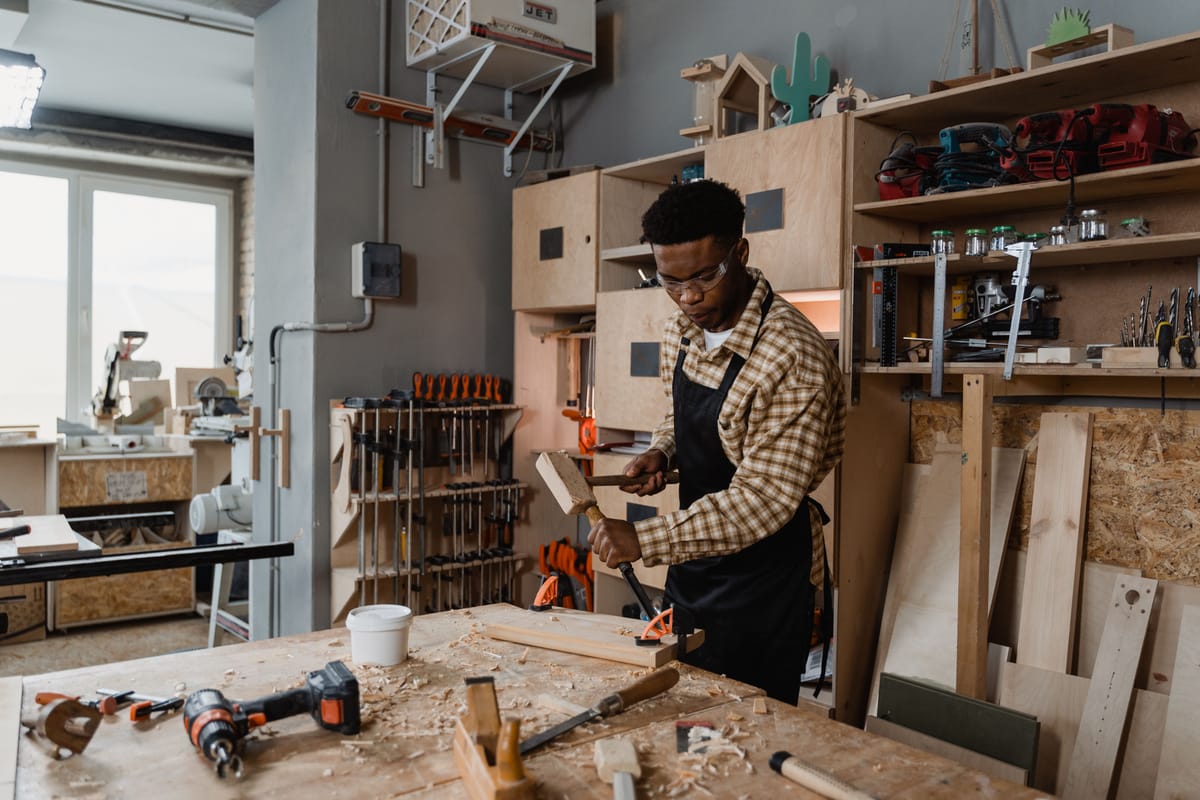
An apprenticeship network could create a practical route from learning to earning while protecting knowledge that the Karoo is in danger of losing.
Two problems are often streets away from each other in the same Karoo town. Younger residents struggle to find a clear path into work, while experienced artisans approach retirement with nobody ready to take over.
Connecting these generations sounds almost too obvious. A retired mechanic could teach a school-leaver how to diagnose an engine fault. An experienced carpenter could pass on the judgement needed to repair an old sash window.
A properly designed Karoo apprenticeship network could preserve practical knowledge while opening routes into employment. The important word, however, is properly.
The skills shortage is already clear
Finding a reliable artisan in a small Karoo town can mean waiting several days or calling someone from a larger centre. Farms face similar delays when irrigation equipment or electrical systems fail.
These aren't obscure occupations with limited futures. South Africa’s official 2024 National List of Occupations in High Demand includes plumbers, carpenters, automotive motor mechanics, diesel mechanics and electricians. Solar installers, welders and pipe fitters are also on the list.
Demand exists because nearly every household, farm and business needs these services. The work can't easily be sourced from a distant city.
The employment crisis is equally clear. Statistics South Africa reported that the official unemployment rate among people aged 15 to 34 reached 45.8% in the first quarter of 2026. About 4.7 million young people were unemployed, while a further 10.6 million were outside the labour force, according to Stats SA’s youth labour market analysis. National figures show the scale of the problem facing young people who leave school without money for university or a direct connection to an employer.
Experience that cannot be learned from a manual
A qualified artisan has two kinds of knowledge. The first can be taught through diagrams and technical lessons. The second is built through years of specialist experience.
An experienced mechanic can recognise a problem from the sound of an engine. A plumber working in an old Karoo house learns that repairs are rarely as straightforward as they appear when pipes have been altered several times. A carpenter understands how dry air and shifting foundations affect old timber.
This practical judgement is difficult to preserve once an artisan closes a workshop. Younger people might inherit tools, but tools are not the same as knowledge.
Retired artisans would not necessarily have to return to full-time physical work. Some could teach for several mornings a week or supervise apprentices while taking on less strenuous tasks. Their age could become an asset rather than the reason their knowledge disappears.
Mentorship is not an apprenticeship
A young resident helping in a workshop would gain useful experience, but informal mentoring alone would not make that person a qualified artisan.
South Africa’s artisan system combines theoretical learning with practical instruction and workplace experience. The Department of Higher Education and Training says an apprenticeship generally lasts between 18 and 36 months before a candidate can gain access to a trade test, depending on the programme and progress made. The National Artisan Development programme explains that entrants usually need at least Grade 9 or an appropriate N2 certificate.
The Quality Council for Trades and Occupations follows a similar structure. Its occupational qualifications contain theory with practical training and a work-based component intended to make learners ready for employment.
A credible network would therefore need partnerships. Retired artisans could provide mentoring, but accredited training providers, employers, SETAs and trade-test centres would have to connect that experience to recognised qualifications. Without this bridge, the Karoo will produce capable assistants who are still unable to prove their competence when applying for formal work.
Safety and certification are essential
Electrical work shows why formal oversight cannot be treated as paperwork. An apprentice learns how to install wiring under supervision, but only a properly registered person can issue an electrical certificate of compliance.
Plumbing, mechanical repairs and building work also have risks. A successful rural artisan training programme would need protective equipment with suitable workshops and clear supervision. The structure must protect retired mentors too. Teaching should not leave them responsible for workshop costs and administration without compensation.
A network rather than a single college
The Karoo’s distances make a conventional training model difficult. A young person in a small town might be willing to learn but unable to travel daily to a distant campus.
A regional network could spread training across existing workshops and schools. Theory could be delivered in scheduled blocks or partly online, while practical work takes place under approved supervision in participating towns.
One workshop could teach vehicle servicing, another welding and a farm could provide experience with pumps and agricultural machinery. Rotation would expose learners to a wider range of problems while preventing the programme from depending entirely on one artisan.
Sector Education and Training Authorities could help fund recognised learning programmes. For example, the SETA says it distributes grants to employers and training providers for learnerships, internships and other forms of occupational training.
The programme should not become another short-lived project built around a temporary grant. Local businesses and established artisans would need a strong role in deciding which skills are genuinely required.
Repairing more than machines
Every repair completed in a town keeps more money circulating locally. A trained artisan eventually employs an assistant and buys materials from nearby suppliers.
An apprenticeship network could create a practical route from learning to earning while protecting knowledge that the Karoo is in danger of losing. The region already has potential teachers and potential apprentices. The real task is to build the accredited, funded structure that allows them to work together.
 Mariana Balt
 Lynette Spencer
 Liz Thorne





Comments ()