
How the Tankwa came to host two very different communities
The encounter between AfrikaBurn and the farming Tankwa should not be reduced to farmers watching strangely dressed outsiders drive past their gates. The more interesting story is that the same environment has produced two different expressions of independence.
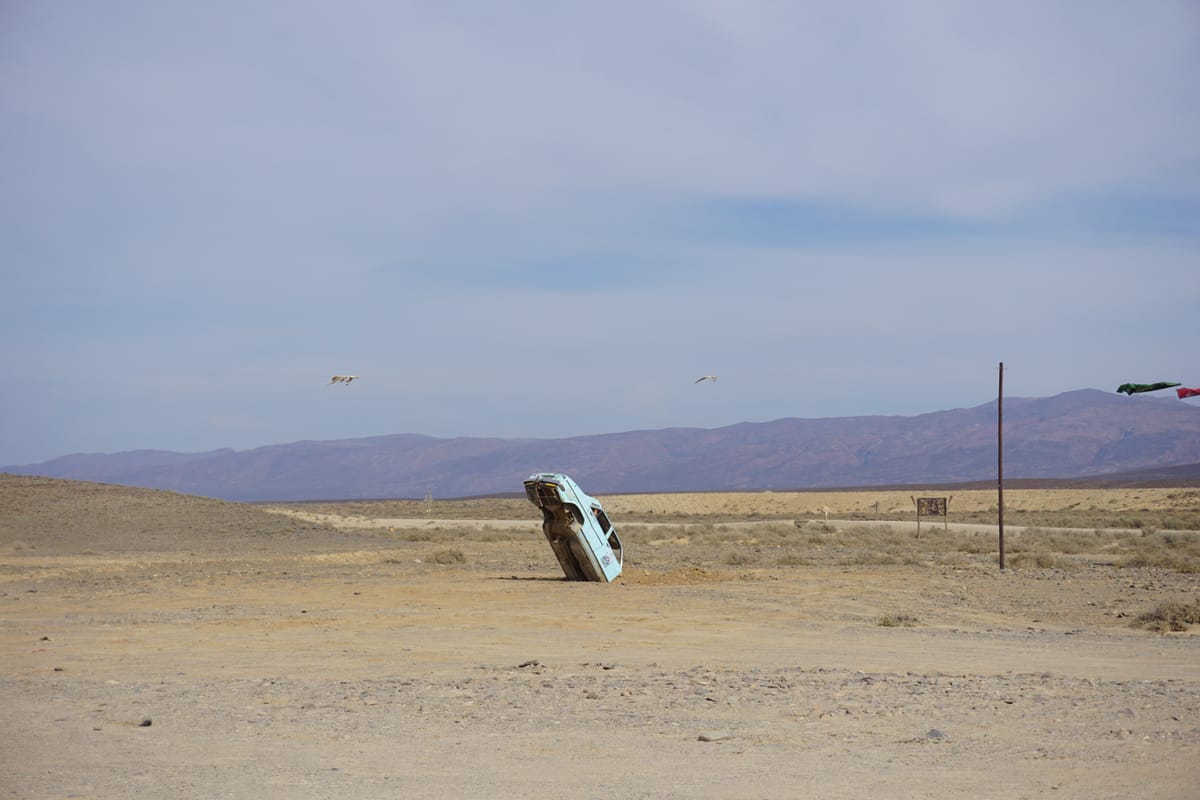
The Tankwa Karoo is one of South Africa’s least populated regions. Farms are far apart and water is limited, while car trouble can leave a person many kilometres from help.
Then, once a year, thousands of people arrive to build AfrikaBurn’s Tankwa Town. The temporary settlement is known for large artworks, elaborate costumes, and radical self-expression. Beyond the reaches of this event is a different Tankwa: one of farming families who have survived generations of physical isolation.
AfrikaBurn is associated with experimentation and alternative culture, while Tankwa farmers are often perceived as traditional or conservative - both, ironically, have developed around an insistence on self-reliance. That said, the meaning of this self-reliance is not quite the same.
Farming before the fences
Humans have occupied the Tankwa for at least 10,000 years. San hunter-gatherers lived in and travelled through the region, followed by Khoe pastoralists who moved livestock in response to seasonal conditions.
Archaeological work suggests that the Tankwa was never the empty space it's sometimes imagined to have been. Surveys along a 30-kilometre stretch of the Tankwa River identified more than 7,000 artefacts across 45 locations. These traces point to a long history of human movement and adaptation before colonial farms appeared.
According to SANParks’ cultural history of the Tankwa, trekboer farmers began using the area during the 1700s. They grazed sheep while moving between the Cederberg and the cooler Roggeveld escarpment.
This early pastoral system was also mobile. Farmers couldn't force the veld to produce grazing throughout the year, so they moved their animals according to the conditions. This movement brought colonial farmers into competition with San and Khoe communities whose own use of the land was progressively restricted.
How farming became permanent
Crown permits and loan-farm arrangements during the 19th century were gradually replaced by surveyed properties and formal title deeds.
At De Kruis, for example, four farms were formally granted by deed between 1880 and 1893, although they had reportedly been used under Crown permits for much longer. Remains of their commercial sheep-farming period include windpumps, camp fences, mountain tracks, covered kraals and a shearing shed.
The windpump was especially important as it allowed groundwater to be brought to the surface in places where permanent settlement would otherwise have been extremely difficult. Fencing allowed farmers to control grazing and breeding. Roads connected isolated properties to wool buyers and distant suppliers.
These systems made commercial farming possible, but the Tankwa was unforgiving. Some parts of the region receive less than 100mm of rain in an average year. Summer temperatures on the plains can be punishing, while the nights and winters can be bitterly cold. Vegetation is sparse and grows slowly. A grazing mistake might take years to correct.
Sheep, particularly wool-producing Merinos, became central to the agricultural economy. Goats were also kept because they could use vegetation that sheep avoided. Self-reliance in this environment therefore became a working system.
When farming land became something else
Parts of the Tankwa entered another transition during the late 20th century. Tankwa Karoo National Park was proclaimed in 1986, initially combining eight Crownland properties covering approximately 27,000 hectares. More farms were subsequently purchased and incorporated into the park, which now covers roughly 146,000 hectares.
The process removed livestock from areas where the veld had been severely degraded. Properties once expected to produce sheep and wool were now expected to protect endemic plants and ecological processes.
Former farms kept their roads, buildings, windpumps and kraals. The national park consequently preserves not only biodiversity but also the physical remains of an agricultural period. A different reinvention began in 2007 when AfrikaBurn held its first event at Stonehenge Farm.
The arrival of Tankwa Town
AfrikaBurn was created as a South African regional event associated with Burning Man in the United States. The first planned gathering at Stonehenge was cancelled after flooding, but the inaugural event took place later in 2007.
Stonehenge was its home until 2019. AfrikaBurn subsequently received a 99-year right to use Quaggafontein, a former farming property elsewhere in the Tankwa. After the interruption of the pandemic years, the first full event at the new site took place in 2022. For a few days each year, participants construct a functioning temporary settlement in an area without the infrastructure of a normal town. There are artworks, camps, performance spaces and specially built vehicles, but there are no conventional shops within the event.
Participants are expected to bring their own food, water, shelter and other necessities. They must prepare for heat, dust, cold nights, wind and the possibility of mechanical failure on difficult roads. They're also expected to remove what they brought with them under the principle of leaving no trace.
This is AfrikaBurn’s version of radical self-reliance - accepting responsibility for one’s own survival while also placing a strong emphasis on communal effort. Participants build camps and give food or experiences without expecting payment. Individual preparation makes collective participation possible. This iteration of self-reliance involves being capable enough to contribute without becoming an avoidable burden on everyone else.
Two meanings in the same desert
There are obvious similarities between the farmer and the AfrikaBurn participant. Both must calculate water carefully and understand the importance of fuel, tyres, tools and spare parts. Both know that a remote region punishes poor preparation. Neither can assume that formal services will be there when something goes wrong.
Both cultures also depend on mutual assistance. Farmers are highly independent, but agricultural life has long relied on neighbours and shared knowledge. AfrikaBurn celebrates individual responsibility, but its temporary city exists only because thousands of people cooperate.
Self-reliance is continuous for the farmer, practised through droughts and uncertain livestock prices. The consequences of a poor decision can be felt for years. Self-reliance is deliberately temporary for most AfrikaBurn participants, entered for a defined period and supported by supplies brought from outside the region. When the event ends, participants return to homes elsewhere.
Farmers use self-reliance to preserve a working life and legacy. Burners often use it to step outside ordinary life and experiment with a temporary alternative.
More than a culture clash
The encounter between AfrikaBurn and the farming Tankwa shouldn't be reduced to farmers watching strangely dressed outsiders drive past their gates. The more interesting story is that the same environment has produced two different expressions of independence.
One developed gradually through pastoral movement and generations of learning what the veld will tolerate. The other allows participants to discover what they can build when consumption and conventional commerce are removed from the centre of social life.
The two communities don't necessarily share the same outlook, but AfrikaBurn has also existed in the Tankwa for nearly two decades. The event has become another part of a place that has repeatedly been given new purposes. Before it was a festival setting, the Tankwa was Indigenous territory, seasonal grazing country, commercial farmland and conservation land. The region is still several of those things at once.
The desert doesn't erase the differences between people, but it does impose some common rules. Self-reliance in the Tankwa is the understanding of how much responsibility each person must bear in order for a community to survive.
 Mariana Balt
 Liz Thorne
 Lynette Spencer
Comments ()