
Why Karoo Origins should be on every family's bucket list
One cannot help but be reminded that the seemingly empty plains surrounding Graaff-Reinet were once home to extraordinary ecosystems populated by creatures so ancient they predate the dinosaurs themselves.
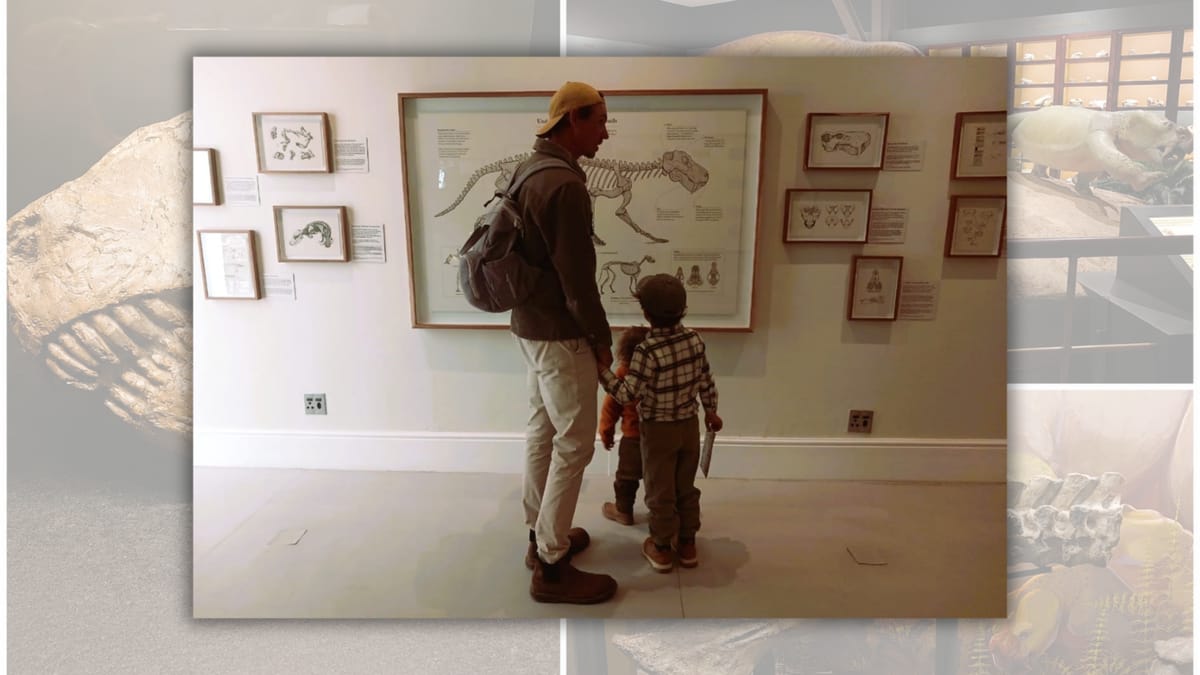
When I took my five-year-old son to Karoo Origins: The Fossil Centre in Graaff-Reinet, I expected to spend a pleasant morning indulging a child who is currently dinosaur-mad. What I did not expect was to find myself possibly even more captivated than he was.
Children may be drawn by the promise of prehistoric creatures, but for adults, the experience of standing in front of an actual fossil is profound. These are the tangible remains of creatures that lived hundreds of millions of years ago, preserved in the deep Karoo stone.
One cannot help but be reminded that the seemingly empty plains surrounding Graaff-Reinet were once home to extraordinary ecosystems populated by creatures so ancient they predate the dinosaurs themselves.
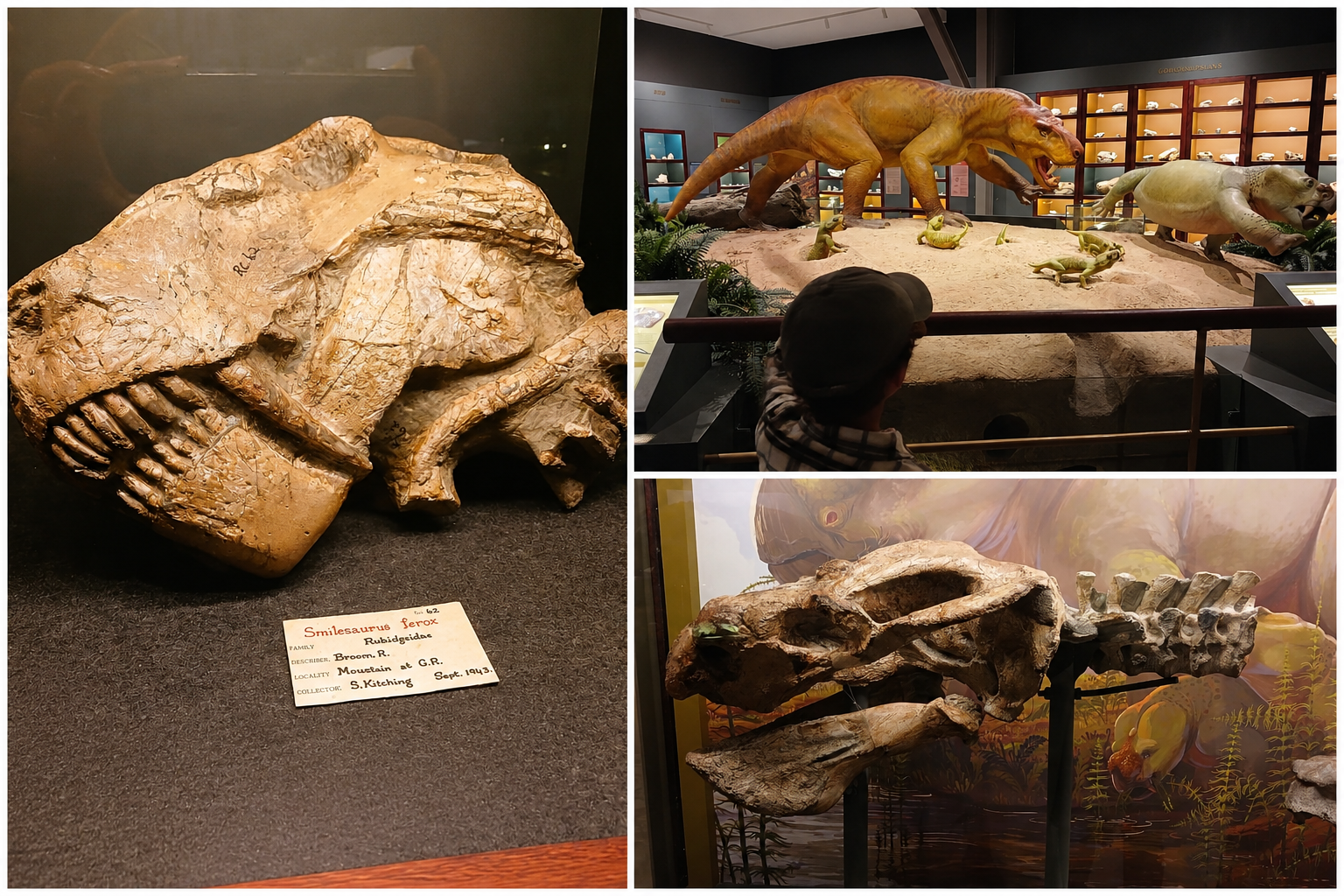
To understand the impact of the museum, it helps to understand the Karoo's place in the story of life on Earth.
The Karoo is internationally renowned among palaeontologists because it preserves one of the world's most complete fossil records spanning the Permian, Triassic and Jurassic periods. The region's rocks contain a near-continuous record stretching across approximately 120 million years, documenting some of the most dramatic evolutionary changes in Earth's history. It is here that scientists have been able to trace the origins of many mammal ancestors and better understand the evolutionary pathways that eventually led to dinosaurs and mammals and ultimately ourselves.
The Triassic Period, which followed the catastrophic end-Permian mass extinction around 252 million years ago, was a time of recovery and experimentation in the natural world. New species emerged while ecosystems rebuilt themselves after the greatest extinction event the planet has ever experienced. Many of the evolutionary developments that built the future of life on Earth can be traced back to this period. The Karoo's fossil beds have played a vital role in helping scientists understand that story.
Karoo Origins brings this deep history vividly to life. The museum itself is beautifully designed, with a theatrical quality that draws visitors into the narrative. Lighting and thoughtful interpretation transform what could have been a purely scientific exhibition into an immersive experience.
The fossil collection itself is extraordinary. The internationally significant Rubidge Collection, assembled over generations by the Rubidge family, contains numerous unique specimens from the Karoo Basin and is considered one of the world's most important collections for studying early mammal ancestors and other Permian and Triassic creatures.
One of the highlights for our family was the animated waterhole exhibit. The six-minute computer-generated reconstruction transports visitors to a prehistoric Karoo waterhole populated by creatures that lived approximately 255 million years ago. The exhibit recently earned international recognition when Cape Town-based Fancy Horse Studios received the prestigious Lanzendorf–National Geographic PaleoArt Prize for Digital Modelling and Animation, awarded by the Society of Vertebrate Paleontology. It marked the first time a South African project had received the honour.
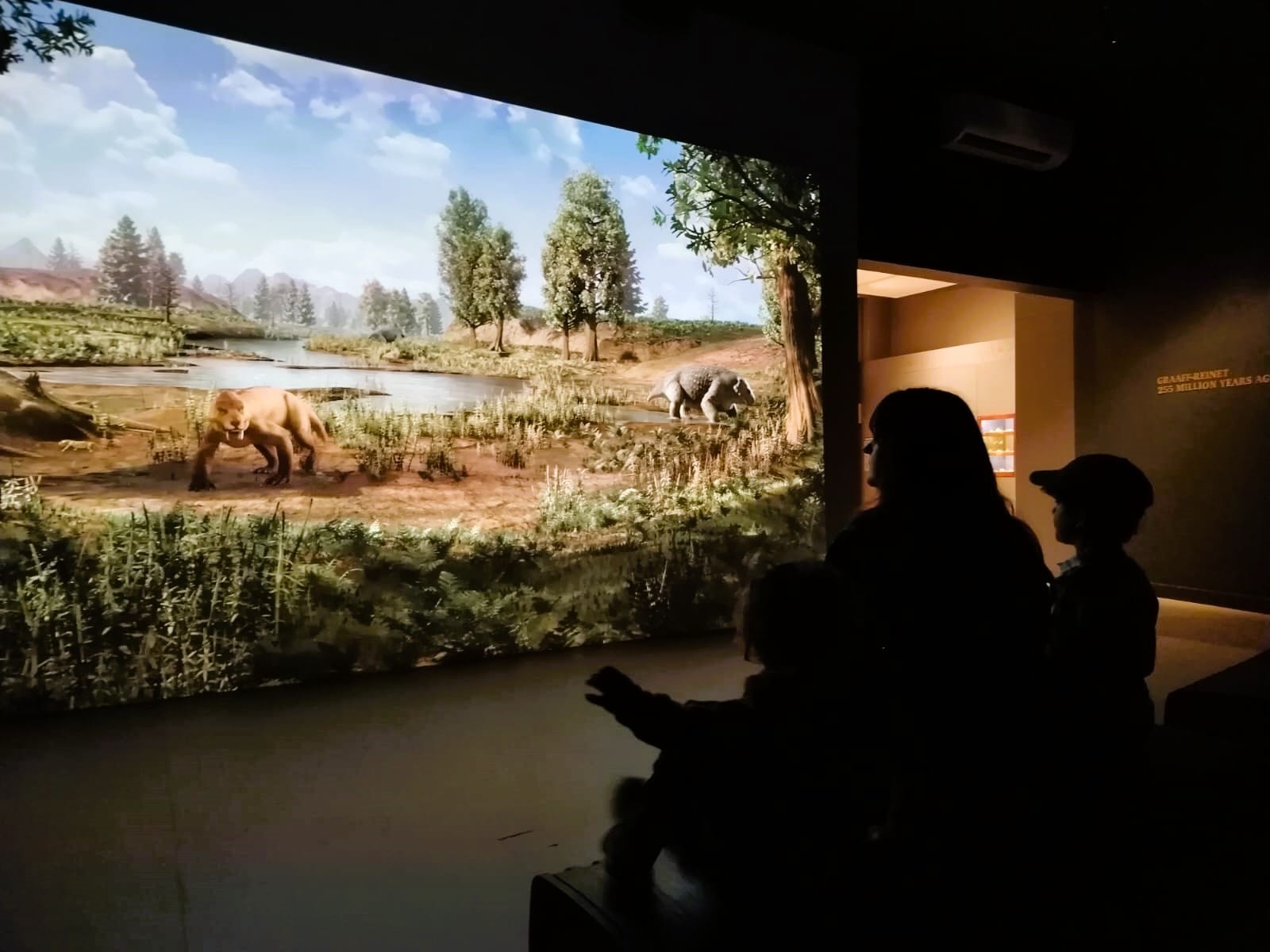
The animation is mesmerising for children, while for adults, it provides something equally valuable: context. Suddenly the fossils on display become living animals moving through a real environment one could almost recognise.
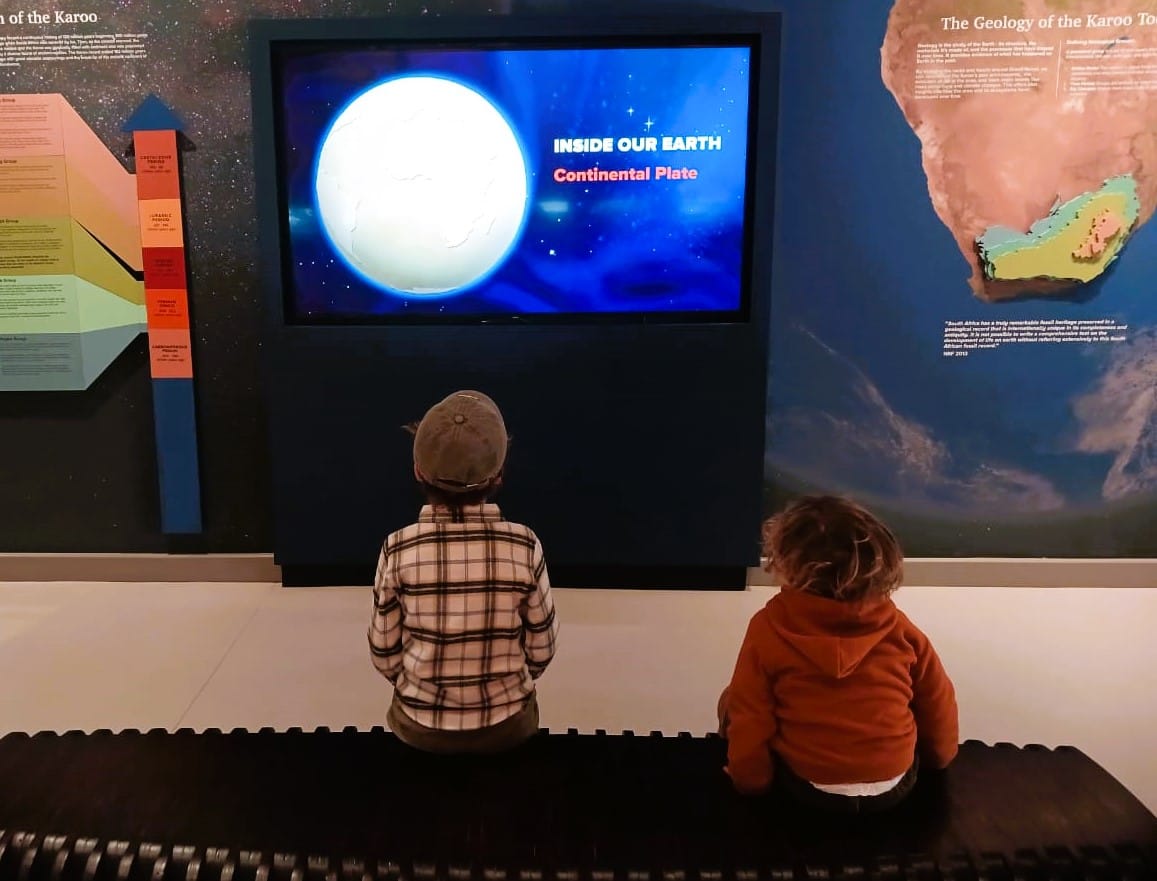
A range of informative video displays throughout the museum enrich the experience further. Visitors can watch palaeontologists excavating fossils in the field and follow the dramatic story of evolution through multiple extinction events and periods of recovery.
Families looking to build on the experience should consider combining a visit to Karoo Origins with an excursion to the Kitching Fossil Exploration Centre in nearby Nieu-Bethesda.
The two attractions complement one another well. At Karoo Origins, visitors learn the broader story of the Karoo's fossil heritage and the remarkable work of the Rubidge family. Professor Bruce Rubidge, whose family collection forms the heart of the museum, also played a vital role in establishing the Kitching Fossil Exploration Centre as a sustainable palaeotourism project.
At the Kitching Centre, children can see fossil preparation demonstrations, learn about legendary Karoo palaeontologist James Kitching, and even join guided fossil walks. Visitors also gain insight into the life and work of the Rubidge family and the scientists who helped reveal the Karoo's prehistoric secrets.
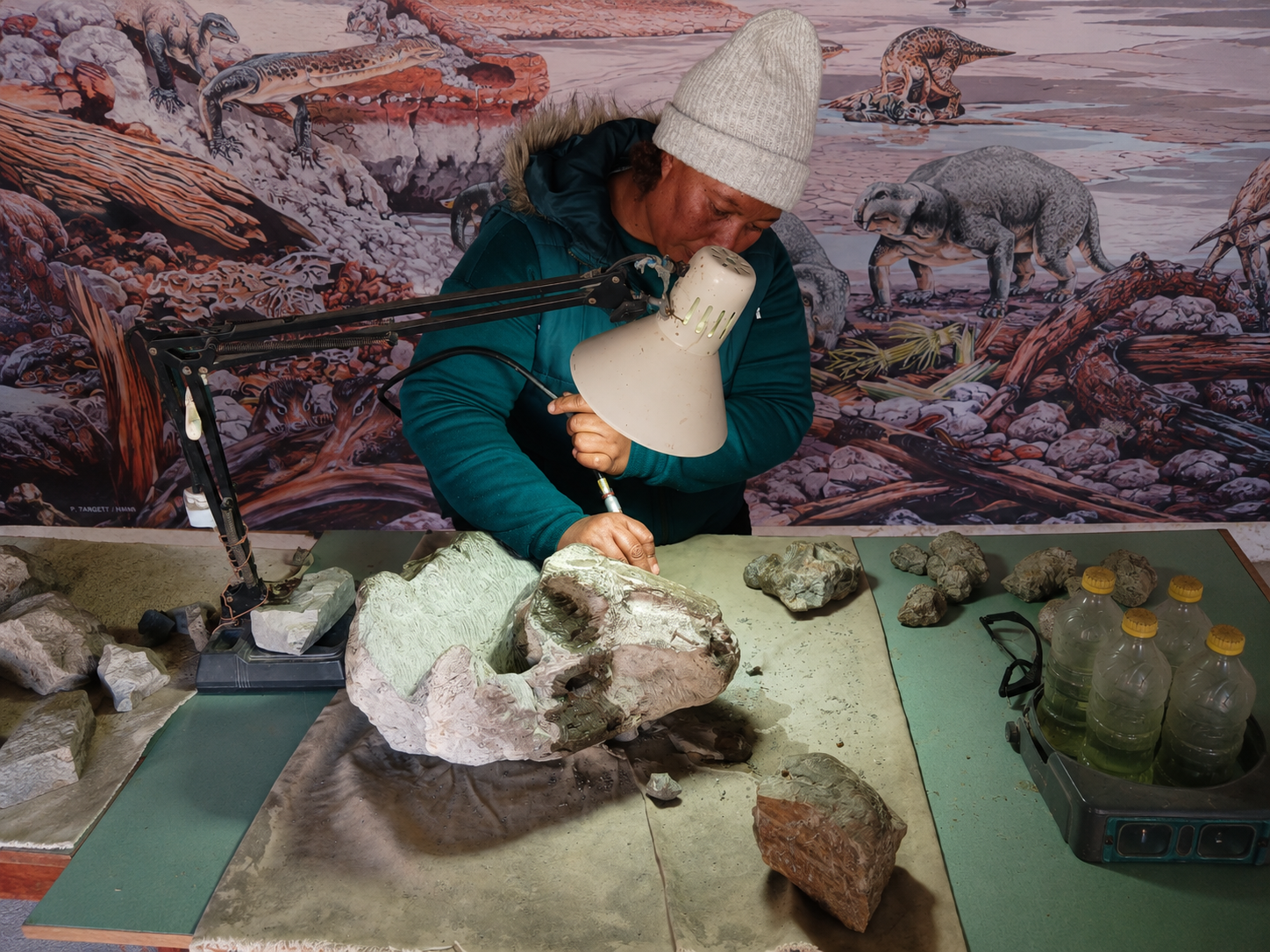
The two experiences transform a simple family outing into a rare opportunity to connect children with science and fascinating land around them.
My son left talking excitedly about ancient creatures and fossils. I left with a renewed appreciation for the Karoo itself. Beneath its plains lies one of the greatest archives of life on Earth, and few places tell that story better than Karoo Origins.
 Anchen Coetzee
 Mariana Balt
 Kara Louw
Comments ()