
The Christmas when Colesberg almost fought over the potatoes
No actual riot is recorded and nobody is named - but the stress is recognisable. Christmas is meant to be the meal for which there's enough to make an ordinary household feel generous.
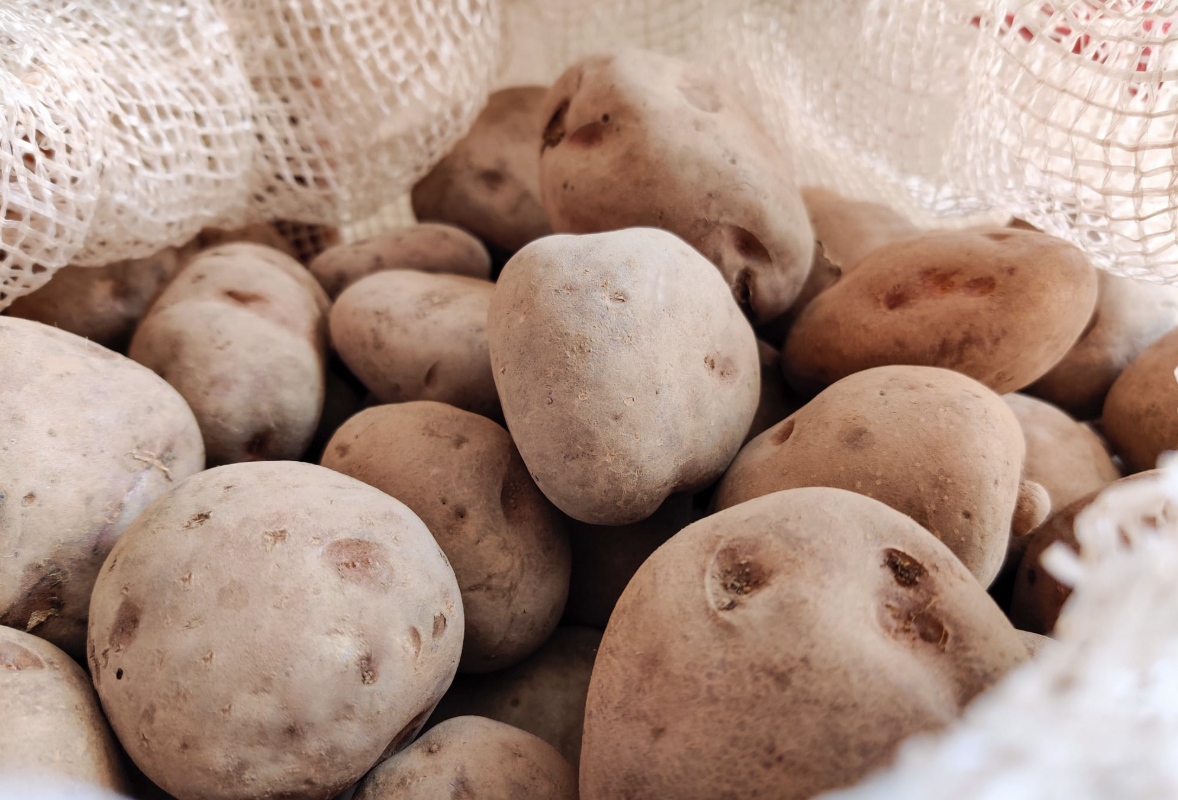
The Christmas vegetables weren't going to stretch very far. According to a short newspaper report, the Colesberg market had a single bucket of potatoes, twice that quantity of green peas and a few onions. The potatoes, the writer observed, “seemed likely to create a riot”. After an argument, they were divided into three lots and sold for a combined £1, two shillings and ten pence.
No actual riot is recorded and nobody is named - but the stress is recognisable. Christmas is meant to be the meal for which there's enough to make an ordinary household feel generous.
A small report, with a date to untangle
The item survives in an online transcription compiled by the Genealogical Society of South Africa’s eGGSA branch. Although the page is headed “1864”, the extract itself is labelled Cape and Natal News, 14 March 1863. The Vernacular Architecture Society of South Africa reproduced it with the same 1863 date in its December 2020 newsletter.
These references point to an earlier incident than the page heading denotes, potentially Christmas 1862. The vegetables offered for public sale were not necessarily all the vegetables in Colesberg, as gardens and private stores also held food. The report offers a glimpse of the availability in one public setting.
A farming town could still go short of food
Colesberg’s economy had flourished during the wool boom of the 1840s and 1850s. A study published in Historia reveals a town whose merchants supplied farmers and travellers heading into the interior. They also bought wool and livestock, sometimes extending substantial credit.
This was a commercial centre connected to a much wider economy. But the town's earlier prosperity was followed by the drought and famine of the 1860s.
Historian Hendrik Snyders includes the drought of 1862–63 in a wider account of the Cape Colony’s agricultural difficulties. His research describes the pressures of drought and disease, and records major imports of wheat and flour during 1861–64.
This is the backdrop against which a bucket of potatoes becomes critical. The Christmas item itself added that flour and bread were unobtainable in some places, with people relying on rice instead. The report belongs to a period when food production was under serious pressure.
Dinner had to travel
Colesberg today is known to many travellers as a stop on a major road, while the town's nineteenth-century connections were slower and more demanding.
The railway extension from Port Elizabeth reached Colesberg only in 1883. A contemporary account, reproduced by the Historical Society of Port Elizabeth, describes the opening celebrations that October: visitors arriving by train to crowded accommodation and festivities in the railway sheds.
The potato dispute preceded this development by roughly twenty years, when a railway could not yet bring replacement provisions into the town, and a shortage couldn't be solved by ordering more from somewhere else.
Scarcity is not divided fairly
The potatoes were split into three lots. Three buyers might have bought them for three households, or for an entirely different purpose - we don't know - but we know that the potatoes were sold.
A scarce food can be a costly inconvenience for one person and completely out of reach for another.
It would be easy to invent a deserving mother or a triumphant bidder, but we can only wonder who in those days of drought was already struggling before Christmas made the shortage newsworthy.
 Liz Thorne

 Lynette Spencer

 Mariana Balt

 Liz Thorne



Comments ()