
Why we keep planting roses
The flower on the kitchen table might have a breeding history stretching across oceans. Its last journey may have been only a few kilometres, carried from one garden to another by someone who thought you would like it.
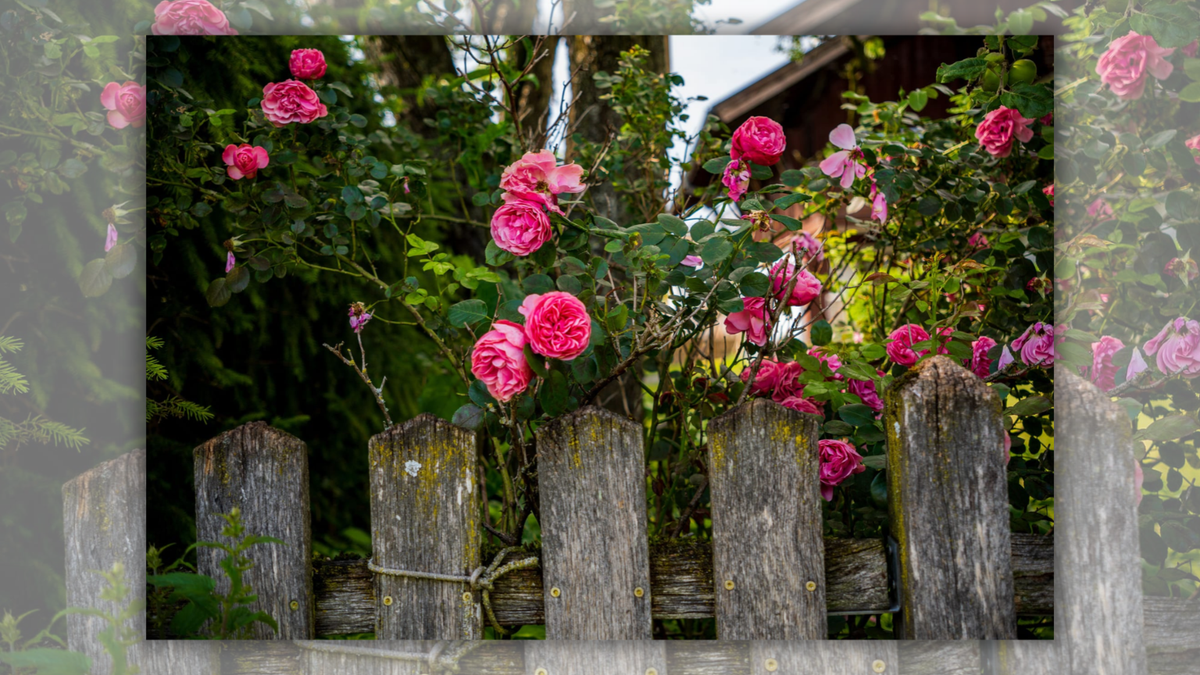
A gardener travelling to China in 1823 was keeping an unhappy account of the plants entrusted to him. A nectarine had put out shoots, then lost them. Perhaps, he thought, a sail hung nearby to dry had dripped salt water onto the plant. A blackcurrant died in a month. A fuchsia survived the voyage, only to decline after being repotted.
The gardener was John Damper Parks, collecting for the Horticultural Society of London aboard the East India Company ship Lowther Castle. His surviving notes, held by the Royal Horticultural Society, show what a phrase like “introduced from China” leaves out. A living plant had to survive the journey.
Later that year, writing from Canton, now Guangzhou, Parks described new transport cases. Glass was scarce, so they had been glazed with transparent oyster shells. Raised on small supports, with false bottoms, they were designed to keep out salt water when the decks were washed. Among the plants he reported acquiring were a double yellow Banksian rose and a yellow China rose.
A rose in a Karoo garden can't be traced to Parks just because it shares ancestry. But his correspondence brings the larger journey into view. Before a flower could become a favourite addition to your grandmother's garden, someone had to keep its predecessors alive on a ship.
The flower we think we know
Roses have become so thoroughly associated with England that their presence in the Karoo can seem like a small ode to the English countryside. There's some truth in the association, but one which the plant's history persistently evades.
On 1 November 1659, Jan van Riebeeck recorded the first rose picked at the Cape from plants brought out the previous year. The entry places roses in the Dutch settlement well before the arrival of the 1820 British settlers, but reveals something about priorities. In a settlement established to provision passing ships, the hurried and harrassed men still made room for a flower.
The exact identity of that rose is less secure than the date. Babylonstoren grows a pink rambler associated with the early Dutch introduction. Their account of the plant acknowledges that the surviving rose cannot be identified with absolute certainty as Van Riebeeck’s original.
This is a recurring difficulty in rose history. Plants survive even as their labels disappear. Names are translated or attached to a lookalike, and a convincing family tradition preserves the origins of the rose without preserving its botanical identity.
The English association becomes more complicated still on closer inspection. Many familiar garden roses owe their ability to repeatedly bloom to cultivated roses from China. European breeders sourced plants developed by generations of Chinese horticulture.
Botanist Martyn Rix, writing for the Historic Roses Group, describes Chinese botanical drawings commissioned around the beginning of the nineteenth century that record cultivated roses. He also recounts seeing roses resembling those early introductions in Chinese village gardens much later. The plants Europeans celebrated as novelties already belonged to an older, and more exotic gardening tradition.
Many established European roses produced one magnificent season of flowers. Chinese roses had the ability to come back into bloom. A garden could provide another flush, and another.
This change eventually produced the repeat-flowering roses we now regard as ordinary. The seemingly traditional garden had been transformed by an import.
The ocean inside the garden
Rose historian Peter Harkness describes the intermediate role of the botanical gardens at Calcutta, where plants in transit received skilled care. Older names like “Bengal” preserve traces of those routes.
The Cape occupied a strategic position in this maritime world, and the settlement was itself a consequence of voyages between Europe and Asia.
Parks’ letters show how much depended on grounded judgement. A captain willing to carry plants was not always someone to whom a collector would entrust his best specimens. Light and drainage were vital factors, as was the design of a case and whether a plant had developed roots before departure.
Later, the Wardian case made such transfers more reliable. Developed by Nathaniel Bagshaw Ward after his observation of a fern growing in an enclosed glass container in 1829, the case sheltered plants from salt water while admitting light and allowing moisture to circulate through condensation. Kew’s history describes the earlier losses: plants arriving dead after long voyages with inadequate light and fresh water.
Better transport allowed more living plants to reach more gardens. The world’s flora could be moved with increasing confidence, serving horticulture as well as colonial commerce.
Sometimes a new rose bloomed en route. Around 1817, on the island then called Île de Bourbon, now Réunion, a rose appeared that is understood to have resulted from a cross between a China rose and an Autumn Damask. Introduced to France, it became the foundation of the Bourbon family, combining qualities of fragrance and repeated flowering.
Tea roses followed another thread. Developed largely by French nurserymen from about 1830, they drew on plants from southern China. Their name referred to a scent likened to fresh China tea leaves. Their elegant buds contributed to the appearance of modern roses.
A garden filled with such flowers is a complicated map. England is there, but so are China, India, France and an island in the Indian Ocean.
From a port to a kitchen window
There's no single documented moment when the Karoo acquired its roses. South African Tourism’s account of the Bedford rosarium credits the 1820 British settlers with bringing rose stock to the eastern districts, linking this inheritance to gardens around Somerset East and Graaff-Reinet. This is one important route into a larger regional tradition, along with the Cape’s earlier introductions.
Once a plant was established, however, its movement need not depend on another overseas shipment, because a gardener could multiply it.
Here the distinction between seed and cutting becomes central to the story. A seedling from a cultivated hybrid doesn't reliably reproduce its parent. It may differ in colour, scent or growth - a useful variation for a breeder seeking something new.
A cutting preserves something already loved. A stem develops its own roots and reproduces the cultivar. Barring mutations, a chain of successful cuttings can bear the same variety through successive gardens.
A grandmother’s rose can therefore be more than a rose of the same colour. A cutting from her plant preserves a direct living connection to its predecessor.
This mechanism explains how roses could circulate through local relationships, although it can't supply a missing history for every old bush. To establish who brought a specific rose to a farm still needs evidence: a garden record or dependable family testimony.
It also changes how we understand the garden as an inheritance. Furniture can be loaded onto a wagon or truck while the house must stay behind. A rose can be rooted in a place, yet capable of being brought along as a small piece of stem.
Where fashion was ignored
During the twentieth century, Hybrid Teas and Floribundas became dominant garden roses. New varieties promised desirable colours and repeated displays. The market encouraged gardeners to look ahead.
South African Tourism describes how Gwen Fagan found valuable surviving roses on Eastern Cape farms and in graveyards. In a region remote from nurseries and the latest fashions, there was less opportunity to replace established plants. And a rose that grew well in hardy terrain was valued.
Fagan approached those plants as historical evidence. Her research became Roses at the Cape of Good Hope, first published in 1988. The Fagan family’s account describes Gwen and her husband Gawie travelling to remote gardens by motorcycle, bringing rose samples back in a cooler box for photography.
It's a wonderful reversal of the maritime story. Earlier collectors laboured to carry plants into new markets. Here were researchers travelling to find what the markets had abandoned.
The Bedford rosarium grew out of the effort to preserve and propagate this inheritance. The rosarium's heritage collection includes names such as ‘General Gallieni’ and ‘Maiden’s Blush’. These are individual plants with specific histories, not just “old-fashioned roses”.
‘General Gallieni’, for example, was bred by Gilbert Nabonnand in France in 1899, with flowers that combine red, pink and yellow tones. A named rose makes the international history tangible: an identifiable nineteenth-century cultivar, still capable of being grown and passed on.
Karoo gardeners kept plants that suited local sites. Mature roots and continuing care all contributed. The roses that failed are largely absent from the story, and what survives is a selected record.
The care that continues the journey
Many nursery roses are budded onto another rose’s rootstock, joining the chosen flowering variety to a supporting root system. If the upper plant dies and the rootstock sends up shoots, a gardener will likely think the rose has changed its flowers. In reality, a different plant is flowering. A cutting taken from that shoot will preserve the rootstock, not the rose someone intended to grow.
Take material from the correct flowering stem and the cutting will grow on its own roots. It will preserve the cultivar, an important distinction when the intention is to save a family rose. In the Karoo, enthusiasm alone cannot substitute for suitable soil and water that reaches the roots. Brackish water brings its own difficulties.
Perhaps this is why the affection lasts. Successful roses are the visible manifestation of care. There's a record of attention in the new shoots that come from careful pruning and the flower brought inside before being damaged by the wind.
Not every rose growing along a stoep is an antique, but a recently bought ‘Iceberg’ can have personal associations as powerful as those of an unnamed survivor. History continues to gather around ordinary plants.
The flower on the kitchen table might have a breeding history stretching across oceans. The rose's last journey may have been only a few kilometres, carried from one garden to another by someone who thought you would like it.
 Lynette Spencer
 Mariana Balt
 Liz Thorne



Comments ()