
A good season can bring welcome financial relief without producing an unprecedented profit. Money that appears to be a windfall could already have a destination: an overdue account or work postponed during leaner years.
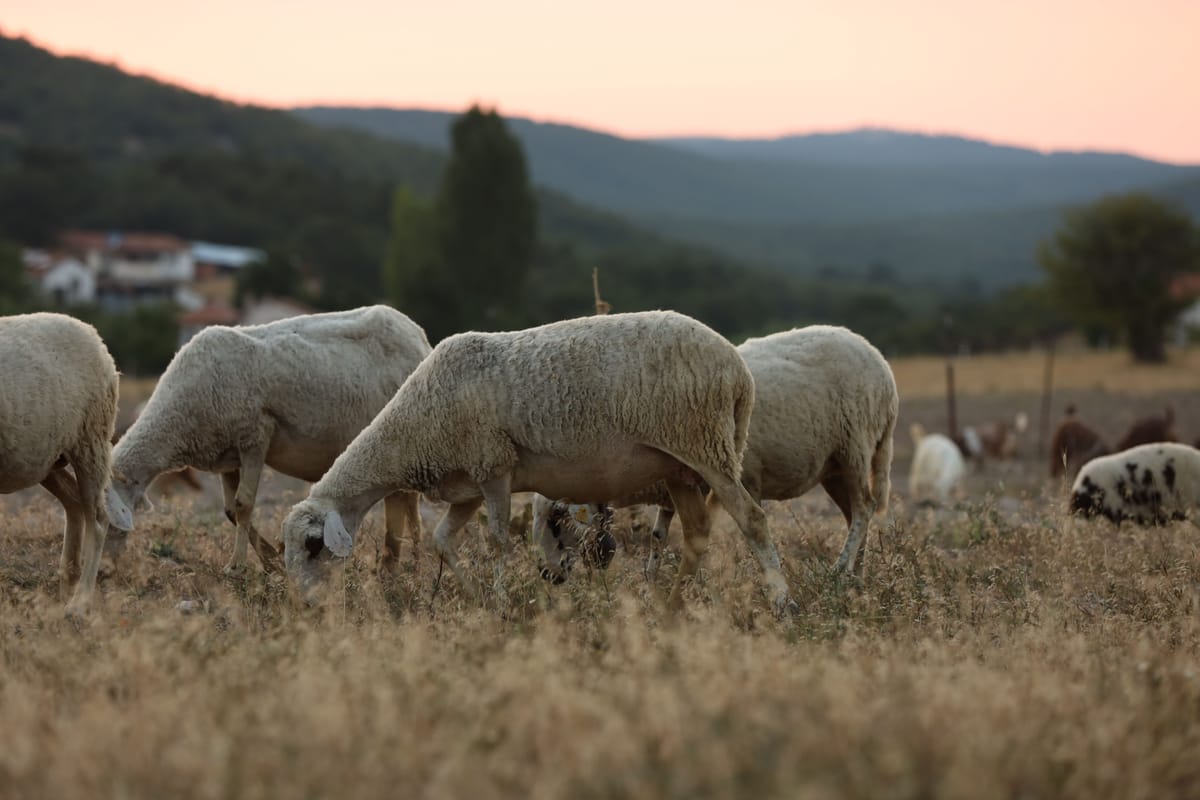
When agricultural economist Wandile Sihlobo described the Karoo’s favourable conditions in June, he reached back half a century for a comparison. The only other year in recent history with similarly favourable conditions, he wrote in an Agbiz research note, was 1974/75. He noted repeated rain, flourishing grazing and benefits for sheep production. The outlook was encouraging after a series of difficult years
The historical record gives us good reason to take the 1970s comparison seriously - and to be careful about how far we stretch it.
The wet years were real
In a study published in 2006, climate researchers Richard Washington and Anthony Preston examined unusually wet years across southern Africa. Their regional analysis identified January to March in 1974 and 1976 as the two most extreme wet seasons in the twentieth-century record they studied.
They also investigated what made those seasons so wet. Changes in the Pacific Ocean were important, but didn't explain everything. A particular pattern of sea temperatures in the southwestern Indian Ocean moved moisture into southern Africa and encouraged rain-producing conditions.
In other words, several parts of the climate system contributed to the deluges. The study covered a much larger region and a specific three-month period. A calendar year, an agricultural season and a wet summer are different measures.
For a closer view, we can turn to a rain gauge near Middelburg.
A longer memory than ours
At Grootfontein, researchers Justin du Toit and Timothy O’Connor analysed more than a century of rainfall observations for a paper published in 2014.
The average annual rainfall in their analysis was 372 mm. The highest annual total they reported was 731 mm, in 1890. The 1970s had wet spells, but the record also showed substantial rainfall in the late nineteenth century and during more recent decades.
This doesn't disprove reports of extraordinary conditions elsewhere in 1974/75, but it does show why “the wettest on record” needs an address. A record at Grootfontein belongs to Grootfontein, and the period covered by its observations are also relevant.
The Karoo is too extensive and varied for one gauge to speak for all of it.
There's a striking older example of this patchiness. In his 2023 study of the Karoo’s rainfall history, researcher Stefan Grab describes a newspaper account of a severe thunderstorm at Colesberg in February 1862. Houses flooded and small bridges were destroyed - during a year remembered for severe drought.
A town could be awash while the wider countryside was still desperately short of rain. Grab’s research drew on historical documents and rainfall records, including records provided by the Rubidge family at Wellwood farm, extending the instrumental evidence available for the region back to 1861. Such records allow today’s weather to be considered against more than a person’s lifetime of experience. They also remind us that the evidence is uneven. Some places have unusually long records and others have gaps.
Why the same amount of rain can produce different results
The rain gauge measures water falling at one point, but it doesn't measure how useful that water is. Agbiz’s June assessment emphasised repeated falls during the cooler autumn months, rather than rainfall totals alone. Sihlobo argued that the timing and frequency had made the season especially valuable for grazing.
A study of long-term grazing trials at Grootfontein, covering 1949 to 1967, found that summer rainfall was especially good for grasses. The characteristic dwarf shrubs benefited from rain during cooler months, while severe summer grazing impacted the grass abundance.
So even in one region, different plants respond to different opportunities. Rain falling when grasses can grow changes the veld differently from rain preferred by shrubs. The subsequent impact of livestock is also important.
This makes “best grazing year” a more demanding description than “wet year”. We need to know what grew, whether animals could use that growth and how well the plants survived their grazing. An impressive green flush can be short-lived, while a less spectacular improvement in established perennial plants could have value long after the green has been subdued.
Even photographs need interpretation
A 2015 synthesis by researchers Masubelele, Hoffman and Bond drew together repeat-photography studies across the semi-arid southeastern interior. These comparisons showed changes in vegetation cover and in the balance between grasses and shrubs. The researchers also noted how difficult it could be to separate the effects of climate from those of land use.
A green hillside doesn't reveal the nutritional value of its plants or how much grazing there is beneath the visible growth.
And what about the money?
For farming families, an exceptional season must eventually be judged against expenditure as well as production. More grazing reduces the need to buy feed and better animal condition improves production. But the financial result also depends on selling prices, repairs, wages, transport and other commitments.
A study by economist Beatrice Conradie used eight years of survey data from 73 Karoo farms to examine small-stock enterprise budgets and drought effects. The study distinguished income above direct production costs from the result after overheads and other expenses.
A season can bring welcome financial relief without producing an unprecedented profit. Money that appears to be a windfall could already have a destination: an overdue account or work postponed during leaner years.
Ranking 2026 against the 1970s financially would need comparable records and adjustments for changes in prices and costs. The evidence considered here does not establish that ranking.
A good year does not need a record
There's enough evidence to say that the mid-1970s were an extraordinary wet period across southern Africa. There's also a credible basis for Agbiz’s optimism about the Karoo’s grazing conditions in June 2026.
What we cannot yet say is that 2026 has been the wettest, most productive or most profitable year across the entire Karoo since then. Those are three separate claims, each needing different evidence. The historical comparison invites us to look past the rain gauge and ask what the water achieved. Did useful plants grow? Did animals recover? Did farmers avoid buying feed? Will there be enough grazing if the next years late?
A season earns its value through those changes - it doesn't have to break a fifty-year record to make an enormous difference.

Comments ()