
When the Karoo’s library travelled by train
The trains had freight to move and timetables to keep. Along the way, railway workers made room for books that changed hands, their bindings failing, in a small, isolated world of readers looking for something they had not read.
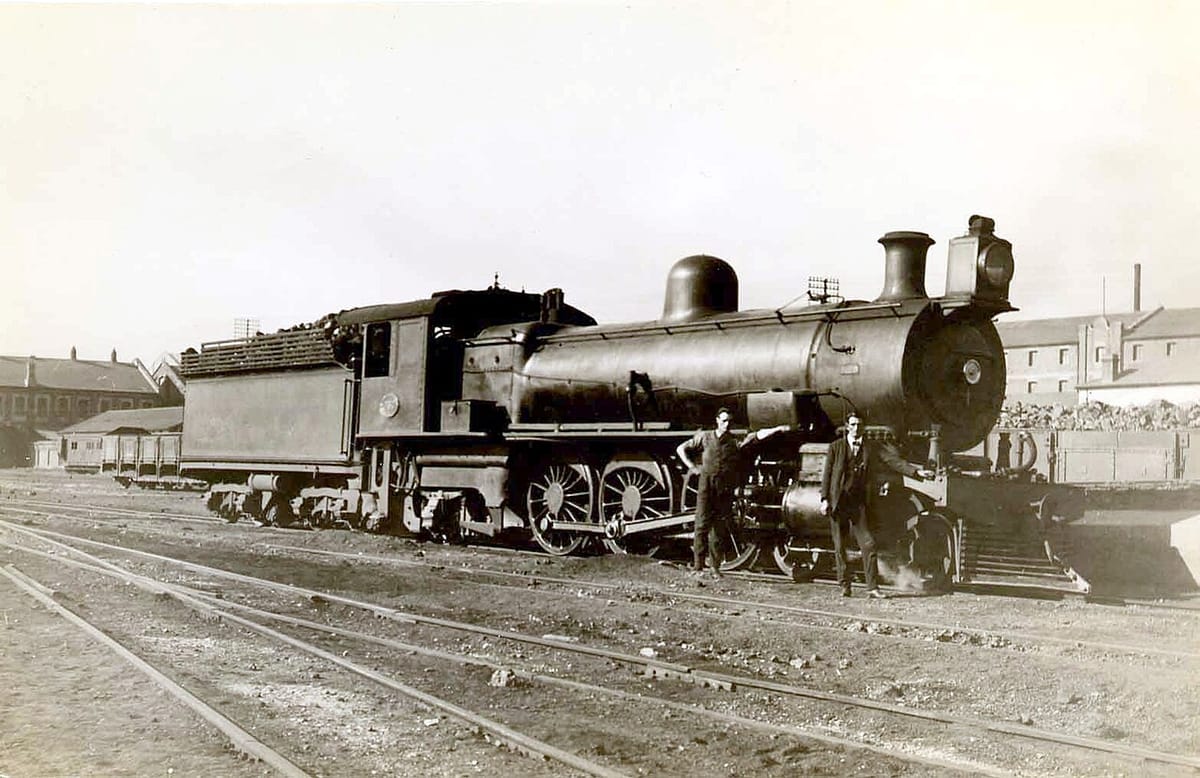
One of the most memorable details in an account of Karoo railway life published in October 1906 is that the books were coming apart: volumes were passed between stations until their covers and bindings disintegrated. Drivers and guards called at station offices looking for something to read, sometimes leaving an old magazine behind.
The account, reproduced by The Heritage Portal from the South African Railway Magazine, sheds light on an informal circulation of reading matter. One of the lesser-known perks of the Karoo's great railway age was that trains could deliver people to an isolated posting and leave them with a good book to read.
A different kind of railway time
The anonymous writer portrays lonely postings where trains offered only brief interruptions to an otherwise monotonous day. In such a setting, a book could transform an afternoon. A fortune could be lost or a stranger arrive with an alarming secret, all before the next service came down the line.
The magazine in which the account was published was itself a recent addition to railway life. A history of the publication records that the Cape Government Railways and Central South African Railways launched the South African Railway Magazine in September 1906. The Karoo piece appeared the following month.
What they wanted to read
The writer names Nat Gould, Marie Corelli and Guy Boothby, along with inexpensive romances and Shakespeare. Gould’s speciality was horse racing, authoring a successful mixture of sporting plots with romance and detective-story elements, with corrupt bookmakers and races decided in thrilling finishes. His novel The Double Event, published in London in 1891, did well on English railway bookstalls and in Australia.
Corelli's novels were concerned with religion and psychic experience, and she enjoyed a career as one of Britain’s most popular writers. Boothby wrote adventures of a more sinister kind, and his internationally successful Dr Nikola books were a mixture of thriller and orientalist fantasy. Nikola possessed hypnotic powers and pursued the occult.
These were expansive, unsettling worlds to enter from a small station office.
Books had already learned to travel
The link between railways and popular fiction was well established overseas. Britain’s National Railway Museum traces the growth of railway bookstalls and the brightly covered, inexpensive novels known as yellowbacks. W.H. Smith opened its Euston bookstall in 1848. Publishers developed books whose striking covers could catch the eye of a traveller with little time to choose.
The local account records what happened further along the journey, after a book had found its first owner. A purchase could become a loan or a volume left for someone else, so that its readership could keep growing without another copy being sold. The books being read to pieces shows the demand for stories in barren places.
The writer who distrusted bookworms
The 1906 writer is an uncertain guide to the pleasures he describes. He worries that reading can become excessive and argues that men should devote more attention to useful knowledge, and marriage. Women are described chiefly as possible companions or wives.
His conclusion is that reading might improve a man, but too much absorption in the pleasure could supposedly distract him from the life he ought to build, but the trains had freight to move and timetables to keep. Along the way, railway workers made room for books that changed hands, their bindings failing, in a small, isolated world of readers looking for something they had not read.



Comments ()