
The water that built Loxton, and the flood that broke it
Read together, the channels and the surviving cottages offer a fuller understanding of Loxton. It is a town where water made life possible, floodwater damaged homes, and yet the village endured.
In March 1961, the water on which Loxton depended became a force of destruction. Heavy rain brought flooding, the dam wall above the village collapsed and water inundated a settlement that had grown around the promise of a reliable supply.
Northern Cape Tourism describes three-quarters of the town as destroyed. This widely repeated estimate gives a sense of the disaster’s scale, although the short, published accounts don't distinguish consistently between buildings lost and those badly damaged.
Loxton's flood is part of a storied history with water: the source that supported its gardens and shaded its streets left damage that influenced the town's architectural history.
A town needed more than a church
Loxton was established in 1899 when the Dutch Reformed Church bought the farm Phizantefontein from A.E. Loxton. Surrounding farmers needed a congregation closer than Victoria West, an arduous journey away. A place to worship in the Upper Karoo also needed somewhere for its flock to grow food and settle.
Architectural historian Franco Frescura’s research on Karoo settlement makes this distinction clear. Religious needs could motivate the founding of a town, while water and land provided the conditions that allowed it to develop.
Loxton’s early history records a good water supply, especially on the eastern side of the settlement. Irrigable plots found ready buyers. Water gave those properties a value beyond the ground available for a house.
Bringing water into everyday life
The village developed ways to distribute its advantage. A dam was completed in 1912, and historical accounts describe fountain water being conveyed from the dam wall towards town through wooden pipes. An old hand pump on the eastern side of Church Street marks another aspect of this relationship. Situated on a former transport route, the pipe supplied people and horses.
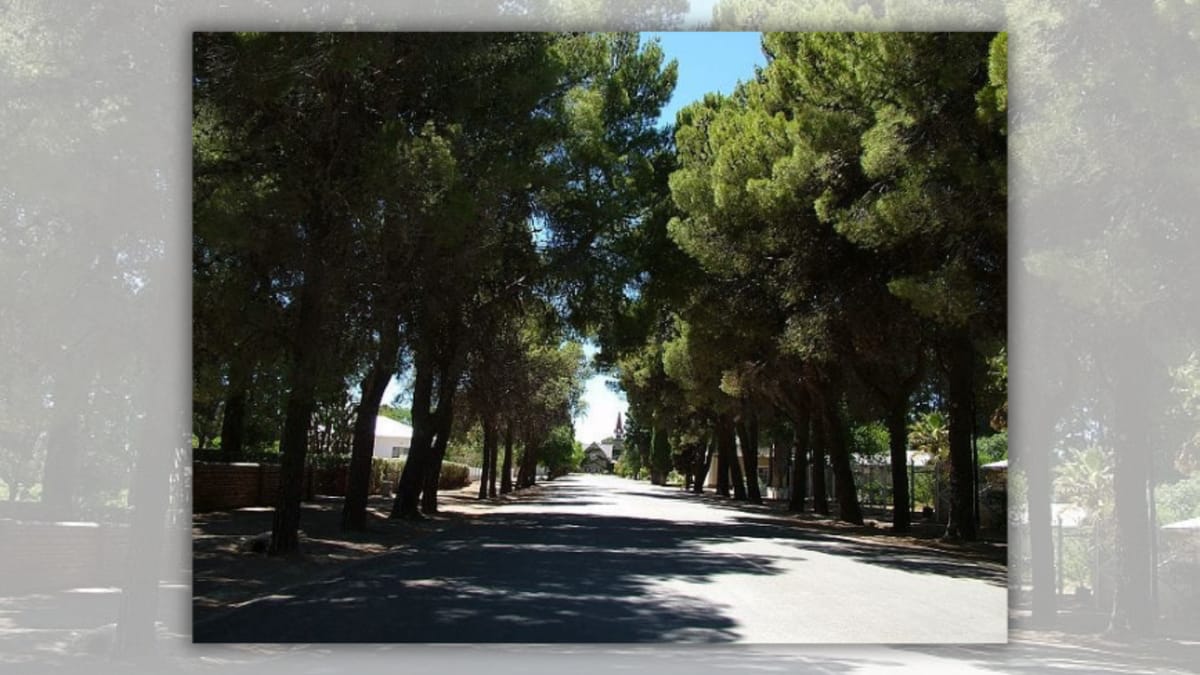
The leiwater furrows brought water into residential life, with fountain water running through channels into gardens, and fruit and vegetables grown on irrigated plots. Trees and gardens depended on an arrangement that connected individual properties to a shared supply. A shaded street was partly the result of planting, but also of the continuing work of delivering water.
March 1961
The published histories agree on the broad outline of the disaster: heavy rainfall, flooding and the collapse of the dam wall above town.
The brevity of these accounts leaves important questions unanswered. What is documented is extensive damage and substantial rebuilding. David Frandsen’s history records buildings requiring renovation and restoration, with eleven new homes built at the same time. As a result, the town visitors now see is the product of both survival and reconstruction.
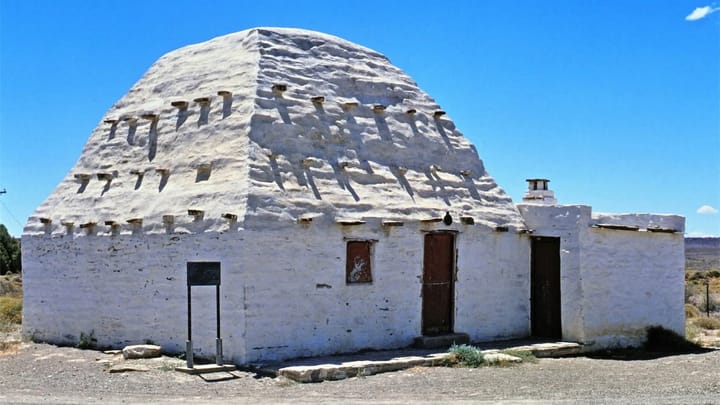
One small building makes the losses more tangible - “Die kothuisie” in Church Street, with its wooden fretwork, is the sole survivor of a group of similar cottages destroyed in the flood.
How can a dry place flood?
Loxton’s experience shows that an area of low rainfall doesn't mean that damaging floods are impossible.
The amount of rain received over a year is different from the intensity of a specific storm. When rainfall arrives faster than the ground can absorb it, water runs over the surface and collects in drainage channels. Terrain and soil conditions influence how quickly that happens. Intense rainfall and rapid runoff can produce flash flooding, including in normally dry regions.
These general processes explain why a town accustomed to valuing water can also face danger when too much comes too quickly.
A history running along the road
Loxton’s relationship with water continued after the disaster, and its narrow leiwater channels still connect the village’s domestic life to the resource that established it. Read together, the channels and the surviving cottages offer a fuller understanding of Loxton. It is a town where water made life possible, floodwater damaged homes, and yet the village endured.
Loxton's shady streets bear out this history: planting and irrigation, loss and repair, and the continuing effort to make a home in dry country.
 Lynette Spencer
 Liz Thorne
 Anchen Coetzee
 Mariana Balt

Comments ()